The short answer
- Polycarbonate is the cheapest roof: about £2,700 to £5,200 fitted for a medium conservatory, against £7,400 to £12,100 for tiled.
- A tiled roof loses about a tenth of the heat: U-value 0.15 to 0.18, against 1.3 to 1.7 for 25mm to 35mm polycarbonate.
- Polycarbonate lets in 8% to 63% of the sun's heat depending on tint, is the loudest roof in rain and typically lasts 10 to 20 years.
- Which? warns polycarbonate can be 'a false economy' because of noise and poor temperature control.
- Re-sheeting like for like needs no building regulations approval. A tiled roof does, and old frames may need strengthening.
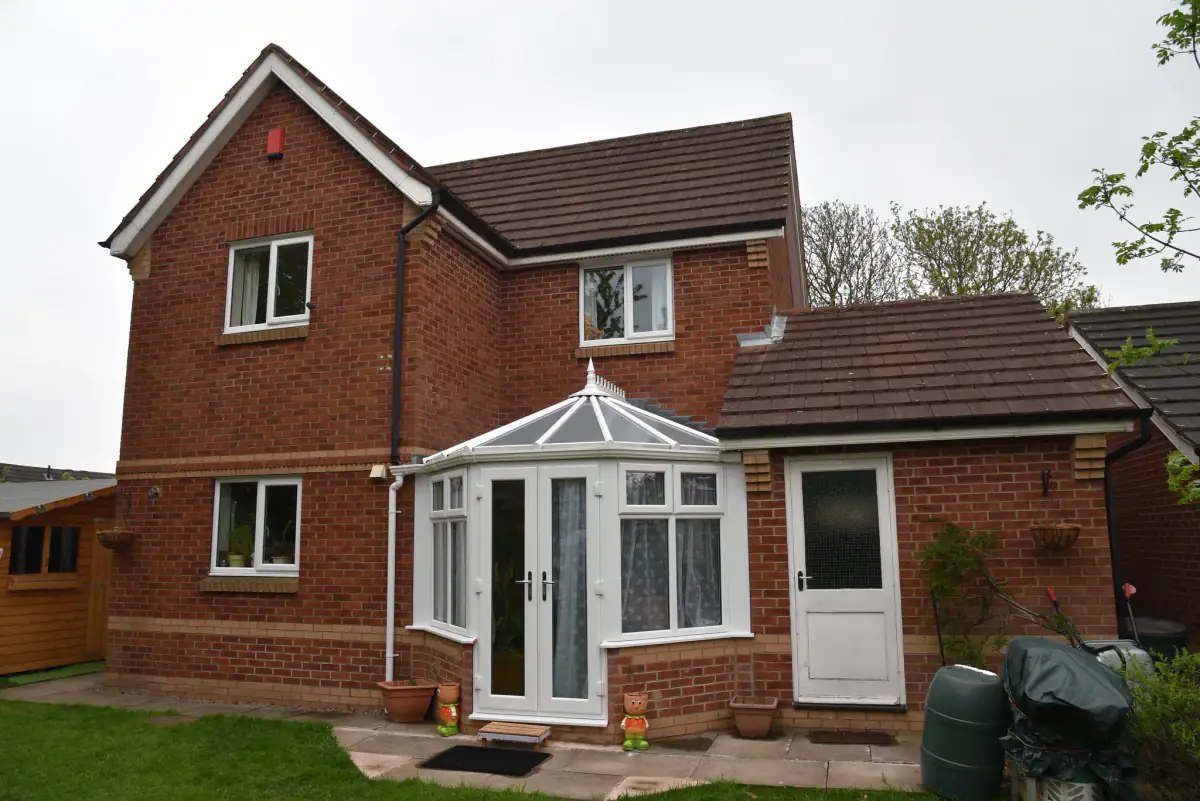
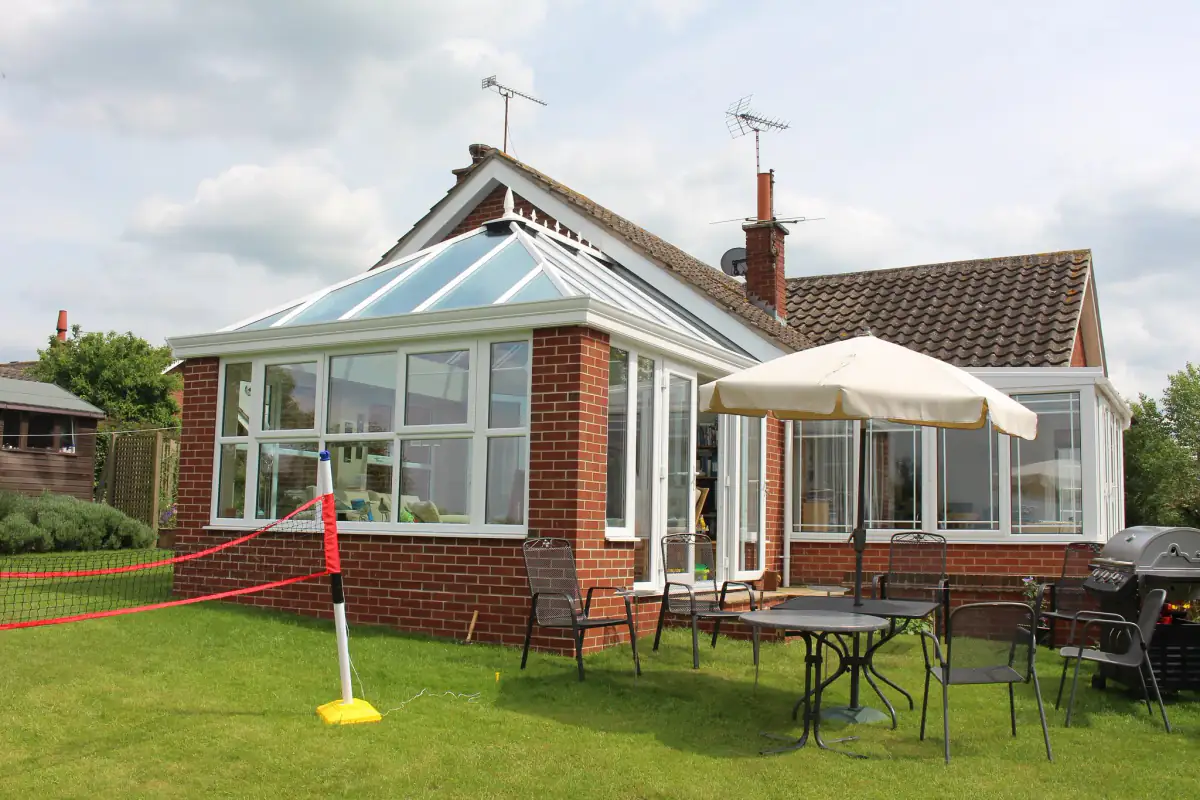
If your polycarbonate roof is tired, leaking or discoloured, the honest comparison is this: new polycarbonate gives you a clean, dry version of the room you already have, while a tiled roof gives you a different room. The tiled roof costs roughly two and a half times as much on our typical figures, but it is the one that changes how warm, cool and quiet the conservatory feels.
Polycarbonate still has a place. It is the cheapest roof, it goes on in a day or two, and it needs no building regulations application when it replaces polycarbonate like for like.
Tiled vs polycarbonate at a glance
| Tiled roof | New polycarbonate roof | |
|---|---|---|
| Price, medium conservatory (about 4m x 3.5m), fitted | £7,400 to £12,100 (typically about £9,600) | £2,700 to £5,200 (typically about £3,900) |
| Heat lost (U-value, W/m²K) | 0.15 to 0.18 (0.12 to 0.13 versions for Scotland and Wales) | 1.3 to 1.7 for 25mm to 35mm sheet (up to about 2.4 for 16mm) |
| Sun’s heat let in through the roof | None, apart from any roof windows | 8% to 63%, from Solarguard tint to clear |
| Time on site | 3 to 6 days | 1 to 2 days |
| Building regulations | Approval needed | Exempt when like for like |
| Lifespan | 25 years plus | 10 to 20 years |
| Daylight through the roof | Low: side windows only, unless you add roof windows | Good when new, less than glass, and falls as sheets discolour |
| Rain noise | Quietest | Loudest of any roof |
Prices are our site-wide ranges for a medium conservatory (about 4m x 3.5m) across lean-to, Edwardian, Victorian and gable shapes, fitted; installers usually quote including VAT, but check. Polycarbonate figures are from Ultraframe’s published data for its 25mm and 35mm sheet; thinner sheet performs worse.
Which is warmer in winter?
The tiled roof, by a factor of roughly ten. A new solid roof in England must reach a U-value of 0.15 W/m²K, and the main systems quote that as standard. Ultraframe rates its 25mm polycarbonate at 1.7 and its 35mm sheet at 1.3. Thinner sheet is worse again: one panel maker quotes 2.4 for 16mm, and a retailer quotes about 2.8 for 10mm twin-wall.
Polycarbonate roofs also suffer from condensation. Warm, moist air hits the cold underside of the sheet, and retail guidance says condensation under polycarbonate is common and recommends ventilation. A tiled warm roof is built with a vapour control layer and taped insulation joints to stop that happening inside the roof.
Remember that the roof is only part of the room. The walls, windows and floor still lose heat after a tiled roof goes on, and homeowners on MoneySavingExpert found comfort depended on those too. Our guide to a cold conservatory covers the rest.
Which stays cooler in summer?
Tiled, because no sun comes through the roof. Polycarbonate lets through between 8% and 63% of the sun’s heat depending on tint, on Ultraframe’s figures for 25mm sheet: 63% for clear, 37% for opal, 26% for bronze and 8% for its Solarguard tint. The darker tints cut heat, but they cut light as well.
One installer says it has measured 55°C on the inside surface of a south-facing polycarbonate roof in July, with the air at 47°C. It published no date, location or method, so treat that as a claim rather than evidence. What is well documented is that overheating is the most common complaint: in Which?’s April 2026 survey, 24% of conservatory owners said the temperature is difficult to regulate.
How much light will you lose?
With polycarbonate, less than you might think at first and more as it ages. Clear 25mm sheet lets through about 68% of visible light when new, according to Pilkington and Ultraframe comparisons, and opal and bronze tints let through far less. Which? notes that polycarbonate tends to let less light through than glass. Over time the sheets discolour: ExpertSure puts polycarbonate’s life at around 10 to 15 years before that happens, and one retailer’s warranty only covers discolouration that cuts light by more than 20%.
A tiled roof lets no light through the roof unless you add roof windows or glazed panels. Light still comes in through the side windows and doors, but a room behind the conservatory that borrows its daylight will be darker. If you are worried about that, compare a hybrid roof with glazed panels.
Which is quieter in the rain?
Tiled, and this is often the deciding factor. Which? says polycarbonate roofs can be noisier, particularly when it rains, and ExpertSure calls rain noise “the most-cited complaint” about them. One installer describes polycarbonate as extremely noisy in rain and hail. No independent decibel tests were found, but homeowners who replaced polycarbonate with an insulated solid roof on MoneySavingExpert reported much less rain noise. New polycarbonate will be exactly as loud as the old sheets. There is more in our page on a noisy conservatory roof.
Cost and value for money
Polycarbonate is the lowest cost replacement roof in every price guide we checked. Our typical figure for a medium conservatory is about £3,900, against about £9,600 for tiled. A re-sheet can reuse the existing glazing bars, although the top caps and clips often break when they are removed and need replacing. A DIY account of re-sheeting a lean-to with 25mm sheet reported £324 in materials and a full day’s work for two people.
The catch is how long you get for the money. Polycarbonate typically lasts 10 to 20 years; tiled roofs are expected to last 25 years plus, though the best known systems date from 2006 onwards, so lifespans beyond about 20 years are not yet proven in practice. Which? describes polycarbonate as potentially “a false economy” because of the noise and temperature problems. A tiled roof will not pay for itself in lower bills either: most people buying one are paying for a room they will actually use.
MyJobQuote’s 2026 guide lists typical extras that can apply to either job: skip hire (£120 to £300), scaffolding (£400 to £800) and, for a solid roof only, internal finishing (£500 to £2,000) and building control fees (around £200 to £400). See polycarbonate roof costs and tiled roof costs for the detail.
Building regulations and paperwork
New polycarbonate on an exempt conservatory is usually exempt too, as long as the conservatory still qualifies afterwards: ground level, no more than 30m², separated from the house by external doors or windows, safety glazing where needed, and not heated by the house’s central heating.
A tiled roof is a different job in law. LABC says replacing a translucent roof with a solid one needs a building regulations application, and the new roof must meet 0.15 W/m²K in England (0.13 in Wales, 0.12 in Scotland). This matters more when the old roof is polycarbonate, because the frames were only designed for a light roof. Polycarbonate weighs a few kilos per square metre (35mm Marlon ST is about 3.9kg/m²), while SupaLite quotes 46kg/m² for its tiled roof. LABC says frames under polycarbonate “may only have sufficient reinforcement to carry that particular load”, so building control will check for steel in the frames and may ask for a trial hole at the foundations. Read can my conservatory take a solid roof? before you get quotes.
Looks and resale
A tiled roof makes the conservatory look and feel like part of the house, with a plastered ceiling inside and tiles outside. New polycarbonate looks clean and bright when fitted, but it is the roof buyers most associate with an old, uncomfortable conservatory, and it will discolour again.
No independent figures show how much either roof changes a house price. What does affect a sale is paperwork. A tiled roof needs its building control completion certificate, and buyers’ solicitors ask for it. New polycarbonate needs none, which is one reason some owners re-sheet just before selling.
Tiled or polycarbonate: which should you choose?
- You want to use the room all year and your budget stretches to about £7,400 or more: tiled.
- The roof leaks but is otherwise sound: get it repaired first. MyJobQuote puts a typical leak repair at around £375.
- You are selling within a year or two and just need the roof dry and clean: new polycarbonate.
- The frames have no steel reinforcement and you cannot fund new frames or posts: polycarbonate or glass, because a tiled roof will not be approved on unreinforced frames.
- Noise is your main complaint: tiled, or insulated panels as a cheaper middle ground.
- You want more light and less noise but not a solid roof: look at glass, which is quieter than polycarbonate and lets in more light.
When you get quotes for a tiled roof, ask each installer how they checked your frames for reinforcement, whether a trial hole is planned, and who will apply for building control and hand you the certificate.
Heat lost and sun let in, side by side
Questions people ask
How long does a polycarbonate conservatory roof last?
Claims vary widely. Sellers and review sites quote anything from around 10 years to 20 years or more depending on sheet thickness, and ExpertSure puts it at about 10 to 15 years before discolouration. No independent lifespan study was found, so treat any single figure with caution.
Can frames built for polycarbonate take a tiled roof?
Not always. LABC says frames under a polycarbonate roof may only have enough reinforcement for that light load, and building control checks for a steel core by drilling pilot holes or using a magnet. If there is none, new frames or extra structural posts may be needed.
Is thicker polycarbonate worth paying for?
It helps with heat loss. Ultraframe rates its 25mm sheet at a U-value of 1.7 and its 35mm sheet at 1.3, so thicker is warmer. It is still many times less insulating than a tiled roof, and the noise and summer heat problems remain.
Do I need building regulations to re-sheet a polycarbonate roof?
Generally not, if the conservatory still meets the exemption afterwards: ground level, no more than 30m², separated from the house and not heated by the house's central heating. The exemption can be lost if the work significantly reduces how much of the roof is translucent.
Can a leaking polycarbonate roof be repaired instead?
Often, if the leak is local. Which? suggests clearing gutters, replacing loose or cracked panels and resealing joints, and MyJobQuote puts a typical leak repair at around £375. If the sheets are discoloured and brittle as well, replacement is usually better value.
Sources
- Which?: Conservatory prices
- Which?: Conservatories common pitfalls (April 2026 member survey)
- Ultraframe glass roof technical guide (includes polycarbonate figures)
- LABC guidance on solid roofs to conservatories (2018 addendum)
- LABC Front Door: Replacing a conservatory roof
- Building Regulations 2010, regulation 9
- ExpertSure: Conservatory roof replacement cost
- ExpertSure: Tiled vs glass vs polycarbonate roof
- Brett Martin Marlon ST polycarbonate brochure
- SupaLite tiled roof product page
- MyJobQuote: Conservatory roof replacement costs
- Kezzabeth: Replacing a conservatory roof (DIY account)
Written by the Conservatory Roof Guide team
We research every figure from named sources: manufacturers' data, Met Office, HM Land Registry, LABC and published UK price guides. How we compare.
Reviewed by Zaib Khan
Founder of Conservatory Roof Guide. His team has handled 9,000+ conservatory roof quote requests from UK homeowners.