The short answer
- Green is algae or moss and grey is dirt: both come off with warm soapy water and a soft brush, working from a ladder.
- Yellow or brown is the sheet itself degrading in sunlight. It cannot be cleaned away, and discoloured sheets also become brittle over time.
- Never stand or kneel on a polycarbonate roof. Ultraframe says special ladders can be hired for roof access.
- Seller and review-site estimates put polycarbonate's life at about 10 to 20 years. A new polycarbonate roof for a medium conservatory costs about £2,700 to £5,200.
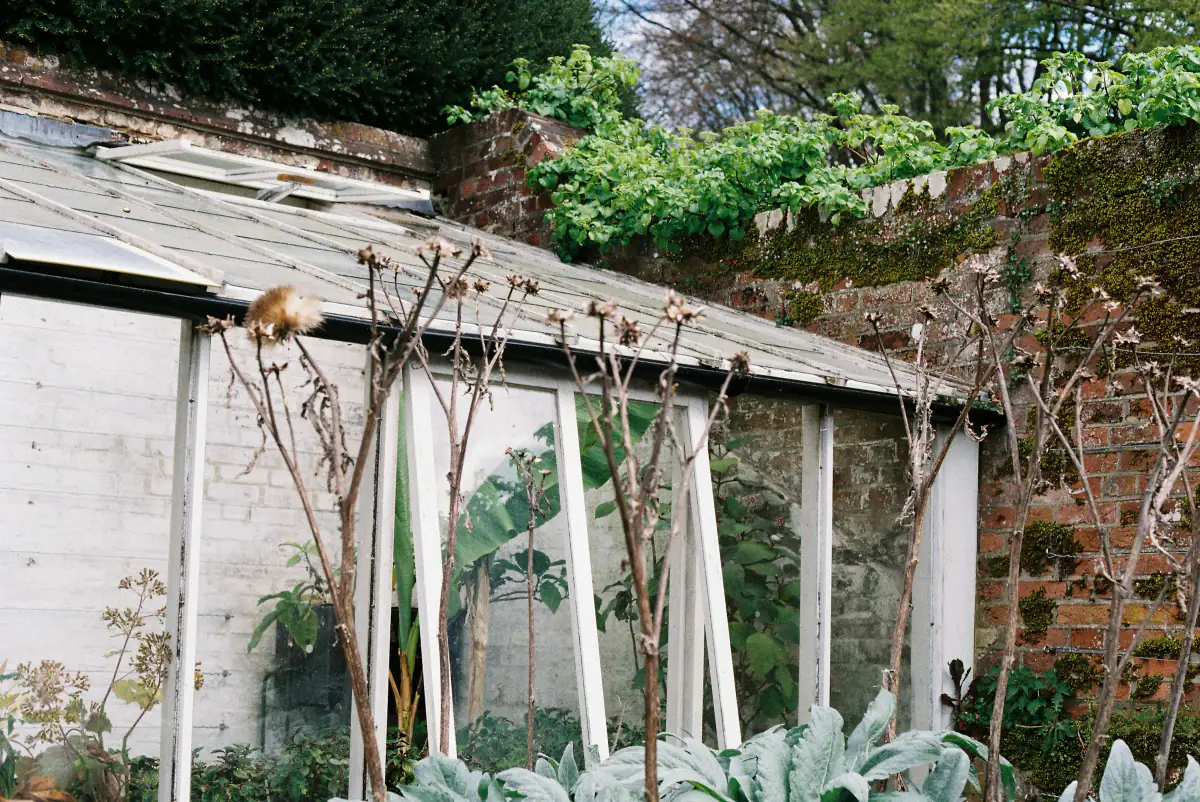
A polycarbonate roof that has gone green or grey is usually just dirty, and you can clean it. One that has turned yellow, brown or cloudy has a different problem: the plastic itself has broken down in sunlight, and no amount of scrubbing will bring it back. Work out which you have before you spend an afternoon up a ladder.
Green, dirty or yellow: which do you have?
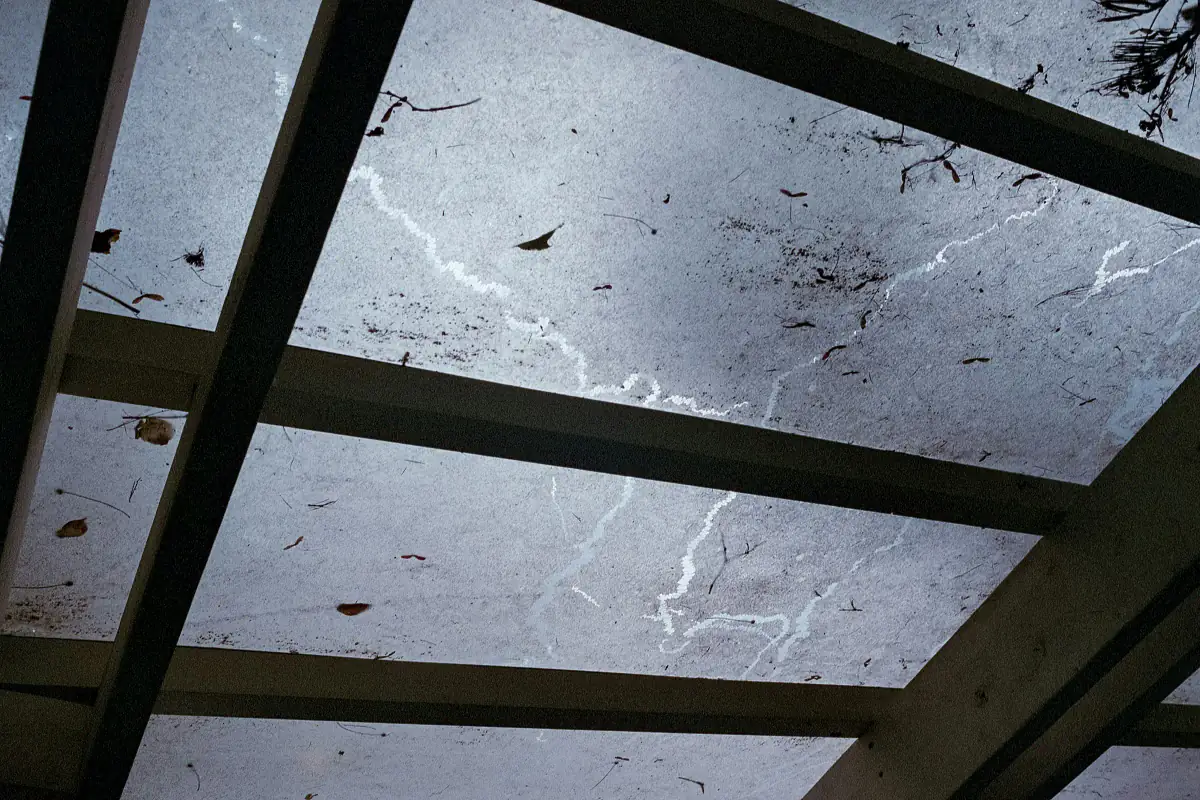
| What you see | Likely cause | Can you clean it? |
|---|---|---|
| Green or black film, moss at the edges | Algae or moss growing where the roof stays damp and shaded | Yes, from outside |
| Grey film, leaves, bird droppings | Dirt and debris | Yes |
| Streaks or growth inside the sheet | Water and dirt in the hollow flutes | No, the sheet needs new end tapes or replacing |
| Misting inside the flutes | Condensation that cannot drain out | Sometimes: check the tape at the bottom of the sheet |
| Yellow, brown or cloudy all over | The plastic degrading in sunlight | No |
A quick test: look at the underside from inside the room. If the colour is the same from inside and out, and a wet cloth does not change it, it is in the plastic, not on it.
How to clean a polycarbonate conservatory roof safely
- Stay off the roof. ConservatoryLand says you should not walk on a polycarbonate conservatory roof, and Ultraframe says it is not safe to stand directly on any conservatory roof.
- Work from a ladder. Ultraframe notes that special ladders can be hired for conservatory roof maintenance.
- Clear leaves and gutters first. Which? names blocked gutters as a common cause of roof leaks, so this is worth doing even if the roof looks fine.
- Wash with warm soapy water and a soft brush or sponge on an extending pole, working down the slope along the line of the flutes.
- Rinse with clean water so no soapy film is left to attract dirt.
- Skip anything abrasive. Check the sheet maker’s care advice before using anything stronger than soapy water.
- Clean the inside with a damp cloth from a stepladder.
- Check the fittings while you are up there: bar caps, end caps and gutter joints. Loose caps and blocked gutters are where leaks start. Our roof maintenance guide has a fuller checklist.
If you would rather pay someone, Checkatrade’s 2024 refurbishment guide puts a professional deep clean at around £12 per roof panel.
If the growth or misting is inside the sheet, cleaning the surface will not reach it. Polycarbonate sheets are meant to have solid tape at the top and breather tape at the bottom, so any condensation in the flutes can drain out. When those fail, water and dirt collect inside, and the sheet needs new tapes or replacing. For more on misting, see conservatory condensation.
Why do polycarbonate roofs turn yellow?
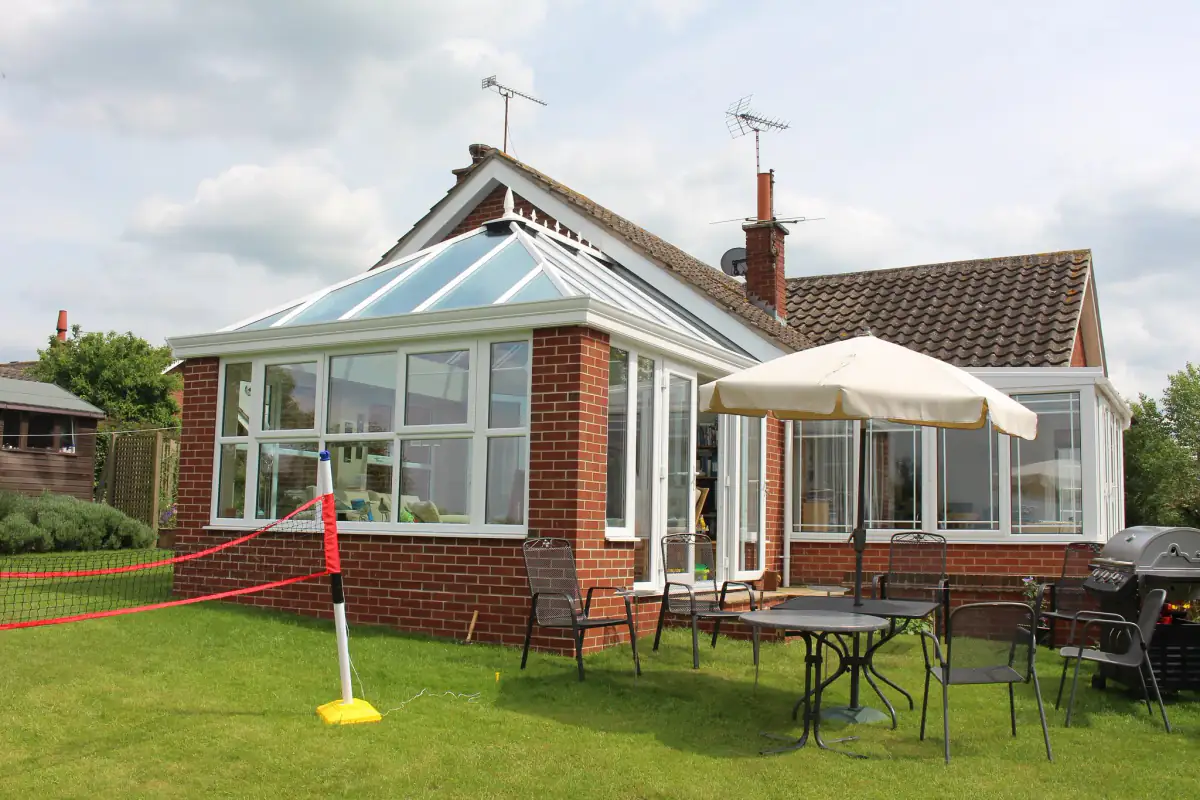
Sunlight, and especially its ultraviolet part, slowly breaks down the plastic. The sheet changes colour, lets through less light and becomes more brittle, which is also why old roofs crack and leak. How fast depends on the sheet and its UV protection, and published estimates vary widely:
| Source | Stated lifespan of polycarbonate |
|---|---|
| Little Conservatory Company (installer) | Degrades and discolours within 5 to 10 years |
| The Eco Experts (review site) | Around 10 years |
| ExpertSure (review site) | Around 10 to 15 years before discolouring |
| MyHomeImprovements (review site) | 10 to 15 years with proper maintenance |
| ConservatoryLand (installer) | 10 to 20 years |
| WholesalePOS (sheet retailer) | 25 to 30 years for 16mm to 25mm multiwall |
Notice the pattern: firms selling replacement roofs quote shorter lives and the firm selling sheet quotes longer ones. No independent lifespan study was found. One retailer’s example warranty covers 10 years against discolouration of more than 20% light loss, so if you re-sheet, ask exactly what the discolouration warranty covers. Our guide to how long a conservatory roof lasts compares all roof types.
What to do when the sheets have yellowed
You have four options, from cheapest to dearest:
| Option | What it involves | Typical cost, medium conservatory |
|---|---|---|
| Insulated panels | Opaque panels in the existing bars | £1,800 to £4,600 |
| New polycarbonate | New sheets in the existing bars | £2,700 to £5,200 |
| Glass | Usually a new roof designed for glass | £3,500 to £7,000 |
| Tiled | A new insulated solid roof | £7,400 to £12,100 |
Re-sheeting is the like-for-like fix. The caps come off, the old sheets come out, the bars and seals are checked, and new sheets go in with the flutes running downhill and the right tapes at each end. One couple’s DIY account of re-sheeting a lean-to with 25mm multiwall put the materials at £324, with two people working a full day. Think about the specification while you are at it: on Ultraframe’s figures, 35mm sheet loses less heat than 25mm (U-value 1.3 against 1.7), and opal, bronze or Solarguard tints let through far less of the sun’s heat than clear sheet. Our guide to polycarbonate thickness compares the options, and new polycarbonate roof costs has prices.
The catch is that new polycarbonate brings back everything else about polycarbonate: hot in summer, cold in winter and loud in the rain. If those bother you, a glass roof, insulated panels or a tiled roof cost more but fix them too. Glass is heavier, so the frames need checking; LABC notes that frames built for polycarbonate may only have enough reinforcement for that load. See conservatory roof costs to compare.
When you get quotes, ask each installer to name the sheet or glass it will fit, its thickness and tint, and what its guarantee says about discolouration.
Questions people ask
Can yellowed polycarbonate be cleaned?
No. Yellowing happens inside the plastic as sunlight breaks it down, so it is not dirt and no cleaner will remove it. The only fix is new sheets or a different roof.
How long before a polycarbonate conservatory roof discolours?
Estimates vary with who is selling what. ExpertSure puts it at around 10 to 15 years before discolouration, The Eco Experts at around 10 years, and one installer says polycarbonate degrades and discolours within 5 to 10 years. A sheet retailer quotes 25 to 30 years for 16mm to 25mm multiwall.
Can I walk on my polycarbonate roof to clean it?
No. ConservatoryLand says you should not walk on a polycarbonate conservatory roof, and Ultraframe says it is not safe to stand directly on any conservatory roof. Clean from a ladder or a hired conservatory roof ladder.
Do I need building regulations approval to re-sheet a polycarbonate roof?
Replacing a translucent roof with another translucent roof is exempt in England, provided the conservatory still meets the exemption conditions afterwards (ground level, not over 30m², compliant glazing, separated from the house, no house heating). Swapping to a solid or insulated roof does need approval.
Is self-cleaning glass worth it instead?
It can cut the cleaning. Pilkington says its Activ coating breaks down organic dirt in daylight and lets rain wash it off, but Which? says self-cleaning glass needs a roof pitch above 10 degrees to work well. A glass roof also costs more than new polycarbonate.
Sources
- ConservatoryLand: Polycarbonate roof specifications (installer)
- Ultraframe: Solid roofs (safe access)
- ExpertSure: Conservatory roof replacement cost
- The Eco Experts: Conservatory roof cost
- Little Conservatory Company: Polycarbonate vs glass roofs (installer claim)
- WholesalePOS: Polycarbonate roofing sheets guide (retailer)
- Checkatrade: Conservatory refurbishment cost (2024)
- Kezzabeth: Replacing a conservatory roof (DIY account)
- Building Regulations 2010, regulation 9
- Which?: Conservatories, common pitfalls
- MyHomeImprovements: Replacement conservatory roof cost
- Pilkington: Activ self-cleaning glass
- Ultraframe: Glass roof technical guide (polycarbonate U-values and tints)
Written by the Conservatory Roof Guide team
We research every figure from named sources: manufacturers' data, Met Office, HM Land Registry, LABC and published UK price guides. How we compare.
Reviewed by Zaib Khan
Founder of Conservatory Roof Guide. His team has handled 9,000+ conservatory roof quote requests from UK homeowners.