The short answer
- Heat loss is measured as a U-value, and lower is better. Conservatory glass and polycarbonate run from about 1.0 to 2.8 W/m²K; a new solid roof in England must reach 0.15.
- As an illustration, with 20°C inside and 0°C outside, 14m² of 25mm polycarbonate (U 1.7) loses about 480 watts. A tiled roof at 0.15 loses about 40.
- Cheap steps first: keep the door to the house shut, stop draughts, close thermal blinds at dusk and heat the room only when you use it, on its own controls.
- Insulated panels (about £1,800 to £4,600) and a tiled roof (about £7,400 to £12,100 for a medium conservatory) cut roof heat loss most. Walls, windows and floor still lose heat.
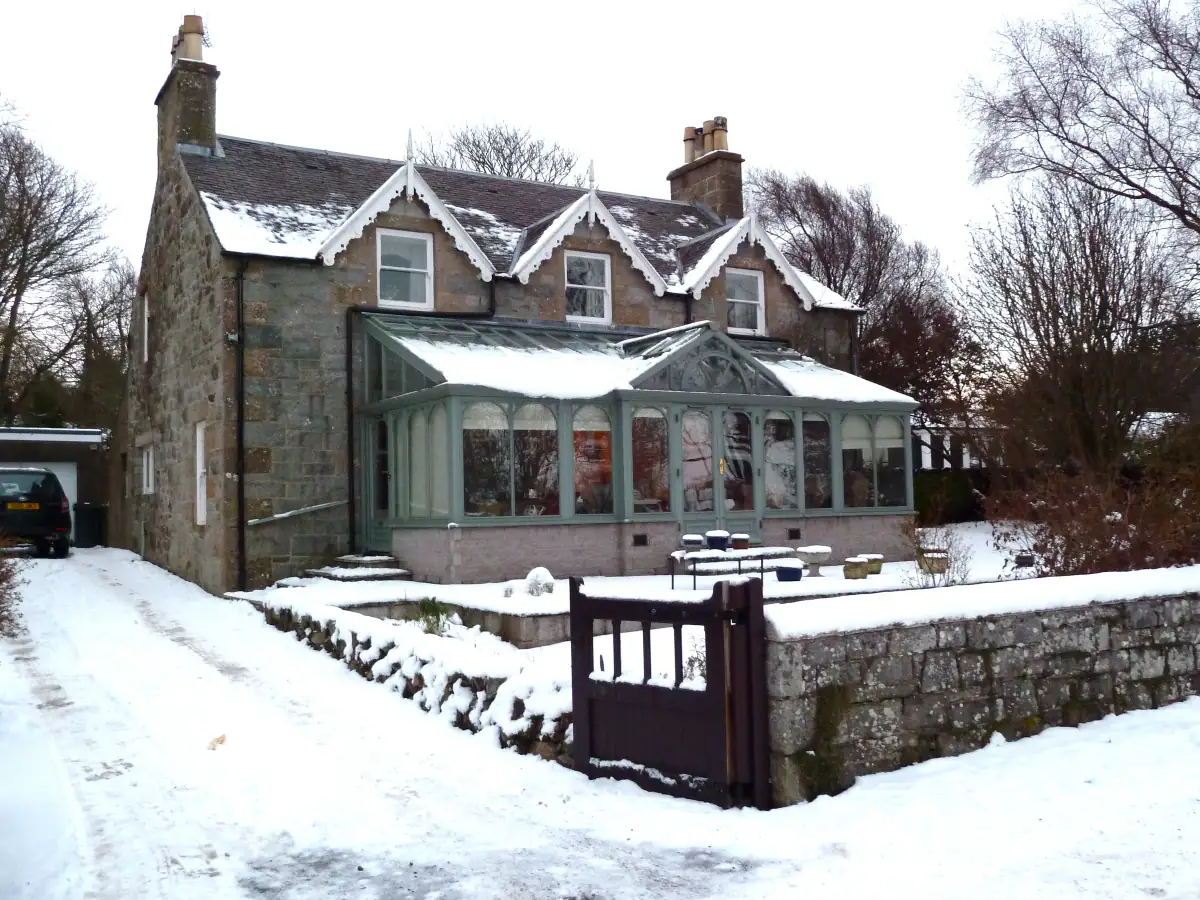
Your conservatory is cold because its roof and most of its walls are glazing, and glazing lets heat out many times faster than an insulated roof or wall. The heat you put in on a winter evening drains away through the roof, and the cold surfaces overhead make the room feel colder still. The fixes below start with the free ones and finish with a new roof, which you can price on our conservatory roof costs page.
Why are conservatories so cold?
Heat loss through a roof is measured as a U-value: the number of watts that escape through each square metre for every degree of difference between inside and outside. The lower the number, the less heat you lose. Here is how conservatory roofs compare:
| Roof | U-value (W/m²K) | Source |
|---|---|---|
| Standard double glazed unit | 2.8 | Ultraframe |
| 10mm twin-wall polycarbonate | 2.8 | Retailer figure |
| 16mm polycarbonate | 1.9 to 2.4 | Retailer and maker figures |
| 25mm polycarbonate | 1.5 to 1.7 | Retailer figure and Ultraframe |
| 35mm polycarbonate | 1.2 to 1.3 | Retailer figure and Ultraframe |
| Performance glass | 1.0 to 1.2 | Ultraframe |
| Insulated panel, centre of panel | 0.29 | Maker claim |
| Solid warm roof | 0.12 to 0.18 | Maker figures |
| Limit for a new roof on an existing home (England) | 0.15 | Approved Document L |
To see what that means in practice, take 14m² of roof (a pitched roof over a 4m x 3.5m floor is a little bigger), 20°C inside and 0°C outside. The arithmetic is U-value x area x temperature difference:
- 25mm polycarbonate at 1.7: about 480 watts, all the time the heating is on
- performance glass at 1.2: about 340 watts
- a tiled warm roof at 0.15: about 40 watts
That is an illustration, not a measurement of your room, but it shows why the roof matters so much. Three other things make it worse:
- Cold surfaces. Your body loses heat by radiation to cold surfaces around it, so a room with cold glass overhead feels chillier than the thermometer says.
- It is meant to be separate. To stay exempt from building regulations in England, a conservatory has to be thermally separated from the house and must not be on the house heating. It is, in effect, designed as an unheated space.
- Walls, windows and floor. Owners on the MoneySavingExpert forum point out that glazed walls, dwarf walls and uninsulated floors lose heat too, whatever the roof.
For more on reading these figures, see our guide to conservatory roof U-values.
How to make a cold conservatory warmer: 8 fixes
Cheapest first:
- Keep the door to the house shut (free). In the government’s Energy Follow-Up Survey, 91% of conservatories had a separating door and 83% of those households kept it shut in winter, mostly to keep heat in the room next door. It does not warm the conservatory, but it stops the conservatory cooling the house, and the exemption depends on that separation.
- Stop the draughts. Check the seals on doors, opening windows and roof vents, since worn seals let warm air leak out. Cheap and worth doing, though it does nothing about heat lost through the roof itself.
- Close thermal blinds at dusk. A blind traps a layer of still air under the roof, which slows heat loss a little. Which? recommends thermal regulation blinds for summer heat, and a polycarbonate retailer suggests thermal blinds against condensation. We found no published figures for winter savings.
- Heat it sensibly, on its own controls. Use an independent heater with its own thermostat and on/off switch, and heat the room only when you are in it. Extending the central heating, or fitting a fixed heating appliance, takes the conservatory out of its exemption from the energy efficiency rules.
- Line the roof from inside (roughly £500 to £1,000 DIY). MoneySavingExpert posters reported DIY insulated ceilings and suspended ceilings in this price range. Ultraframe, which sells replacement roofs, warns linings can damage glazing bars, add weight and cut light. LABC says an opaque lining can end the exemption. One lining firm claims savings of £300 to £400 a year but gives no basis for the figure.
- Insulated roof panels (about £1,800 to £4,600). Panels fitted into the existing roof bars quote 0.29 at the centre of the panel. Bryant & Cairns, a solid-roof installer and so a competitor, argues that heat still escapes at the old rate through the bars and ridge. MoneySavingExpert users who fitted panels reported a more usable room but negligible energy savings.
- A performance glass roof (about £3,500 to £7,000). At 1.0 to 1.2 it beats most polycarbonate and keeps the light, but it still loses far more heat than a solid roof.
- A tiled or hybrid roof (about £6,600 to £12,600). A new solid roof has to reach 0.15 in England. Makers quote 0.12 to 0.18 for their systems. This is the biggest cut in roof heat loss you can buy.
Prices for 6 to 8 are typical fitted ranges for a medium conservatory. Installers usually quote including VAT, but check.
Does a tiled roof make a conservatory warmer?
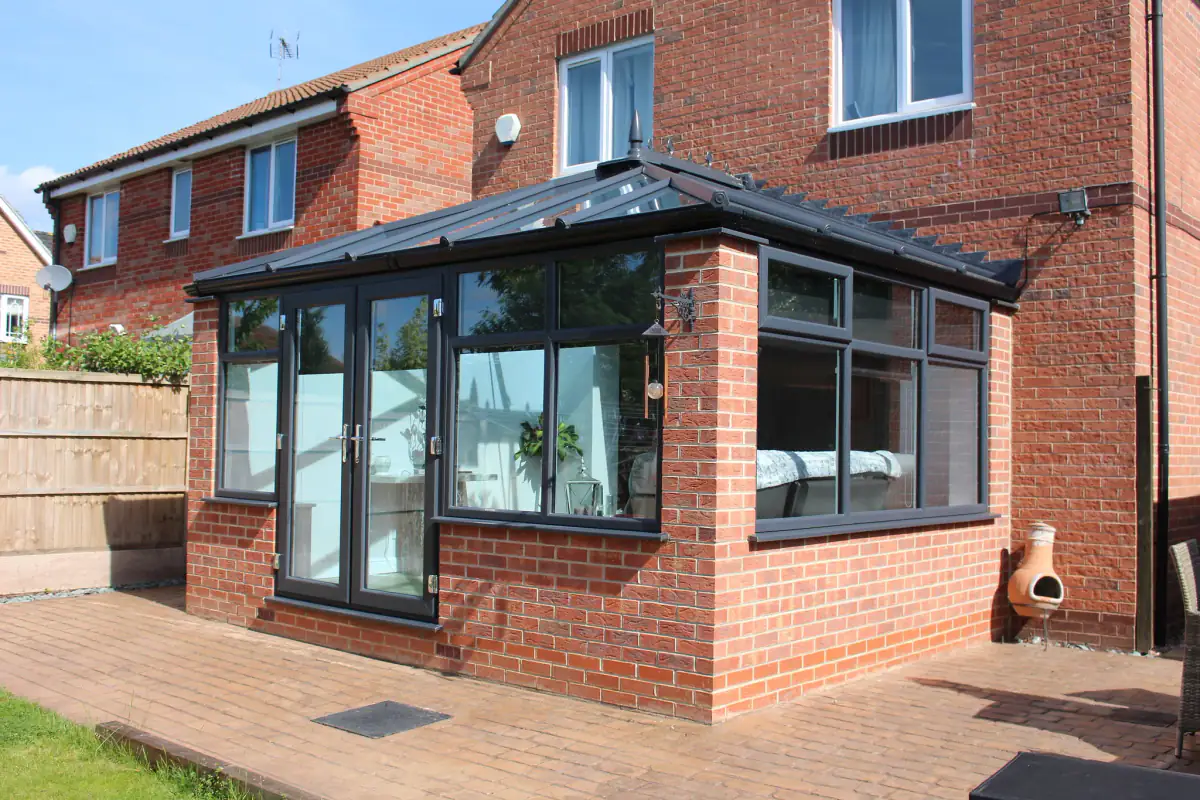
Yes, by more than any other fix. Going from 25mm polycarbonate at 1.7 to a solid roof at 0.15 cuts the heat lost through each square metre of roof by about 90%. See tiled conservatory roofs for how the systems are built.
It will not make the room as warm as the house on its own, though. One MoneySavingExpert poster found their converted conservatory cooler in summer but still needing constant heating in winter. A PistonHeads poster said that in winter it was “still colder than the rest of the house by a couple of degrees”. Others said results depend on the windows, dwarf walls and floor too. LABC’s guidance says building control should not require those to be upgraded on a roof-only job, so if you want them improved, you have to ask for it and pay for it.
Should you heat a cold conservatory?
Most people do. The Energy Follow-Up Survey found about 77% of conservatories had some heating, and 45% of those heated them to the same temperature as the house.
That has a cost. A University of West London study modelled a house with three conservatory designs. Left unheated, the conservatories cut the home’s annual energy use by 12% to 21%. Heated, they added 10% to 30%. The study used modern glazing rather than comparing roof types, but the message is clear: a poorly insulated conservatory is expensive to keep warm.
If you do heat it, keep the heater independent of the house system, with its own controls, so the conservatory stays exempt.
Will a warmer roof cut your heating bills?
We found no independent evidence of what a new roof saves. Guardian cites modelling by AECOM, which it commissioned, showing “more than £200 per year on average” for a 12ft x 12ft Victorian conservatory with electric heating. Against the £6,144 average roof replacement cost Which? members reported in April 2026, that is roughly 30 years to pay back. Most people replacing a roof are buying comfort and a usable room, not lower bills. Our guide to whether a new roof saves money goes through the numbers.
When is a new roof the answer?
Replace the roof when the room is unusable for months each winter, when you are heating it and watching the heat disappear, or when the roof is also leaking, noisy or too hot in summer.
| New roof | Roof U-value (W/m²K) | Typical cost, medium conservatory |
|---|---|---|
| Insulated panels | 0.29 at the centre of the panel | £1,800 to £4,600 |
| Performance glass | 1.0 to 1.2 | £3,500 to £7,000 |
| Tiled roof | 0.15 (makers quote 0.12 to 0.18) | £7,400 to £12,100 |
| Hybrid roof | 0.15 to 0.18 on the solid areas | £6,600 to £12,600 |
A solid roof needs building regulations approval, which your installer normally applies for. See the tiled roof cost guide for prices by style and size.
When you get quotes, ask each installer for the U-value of the whole roof in writing, and whether a panel figure is for the centre of the panel or the roof as fitted.
Questions people ask
Is a glass conservatory roof warmer than polycarbonate?
It depends on the glass. Old standard double glazed units have a U-value of about 2.8, worse than 25mm polycarbonate at 1.5 to 1.7. Modern performance glass at 1.0 to 1.2 loses less heat than most polycarbonate, but both lose far more than a solid roof at 0.15.
Can you use a conservatory in winter?
Many people do not. In the government's Energy Follow-Up Survey, 59% of households with a conservatory used it less than once a week in winter, against 23% who used it six or seven days a week. Owners on the MoneySavingExpert forum who fitted an insulated roof reported using the room all year.
Can I put a radiator from my central heating in the conservatory?
You can, but in England it takes the conservatory out of its exemption from the energy efficiency requirements of the Building Regulations, and Approved Document L then treats it as an extension. To stay exempt, heat it with an independent system that has its own temperature and on/off controls, such as a plug-in heater.
Why is my conservatory still cold with the heater on?
Because heat escapes quickly through a glazed roof and walls, and cold glass overhead draws heat from your body by radiation even when the air is warm. Owners on the MoneySavingExpert forum also point to uninsulated dwarf walls, windows and floors.
Do conservatory roof insulation kits work?
Owners on the MoneySavingExpert forum who fitted DIY insulated ceilings for around £500 to £1,000 said the room became more usable, though one said the savings would never repay the cost. Ultraframe, which sells replacement roofs, warns that linings can damage glazing bars, add weight and cut light, and LABC says an opaque lining can end the building regulations exemption.
Sources
- Ultraframe: Glass roof technical guide (U-values for glass and polycarbonate)
- WholesalePOS: Polycarbonate roofing sheets guide (retailer U-value figures)
- Approved Document L, Volume 1 (2021 edition incorporating 2023 amendments)
- BRE for DECC: Energy Follow-Up Survey 2011, Report 6: Conservatories
- University of West London: Impact of conservatory as a passive solar design of UK dwellings
- LABC guidance on solid roofs to conservatories (May 2018 addendum)
- MoneySavingExpert forum: Replacing conservatory roof
- Guardian: A warmer winter with a Guardian conservatory roof (AECOM modelling, manufacturer claim)
- PistonHeads forum thread on a solid conservatory roof (anecdote)
- Which?: How to keep a conservatory cool (April 2026 roof cost survey)
Written by the Conservatory Roof Guide team
We research every figure from named sources: manufacturers' data, Met Office, HM Land Registry, LABC and published UK price guides. How we compare.
Reviewed by Zaib Khan
Founder of Conservatory Roof Guide. His team has handled 9,000+ conservatory roof quote requests from UK homeowners.