The short answer
- Glass costs about £3,500 to £7,000 fitted for a medium conservatory; new polycarbonate about £2,700 to £5,200. Switching from polycarbonate to glass usually needs a new roof frame.
- Modern performance glass has a U-value of 1.0 to 1.2. Polycarbonate is 1.3 to 1.7 for 25mm to 35mm sheet and worse for thinner sheet.
- Which? says polycarbonate is less thermally efficient than glass, noisier in rain and lets less light through.
- Glass lasts 25 years plus. Polycarbonate typically lasts 10 to 20 years and discolours with age.
- Neither usually needs building regulations approval if the conservatory stays exempt. For summer heat, the grade of glass matters: see our guide to solar control glass.
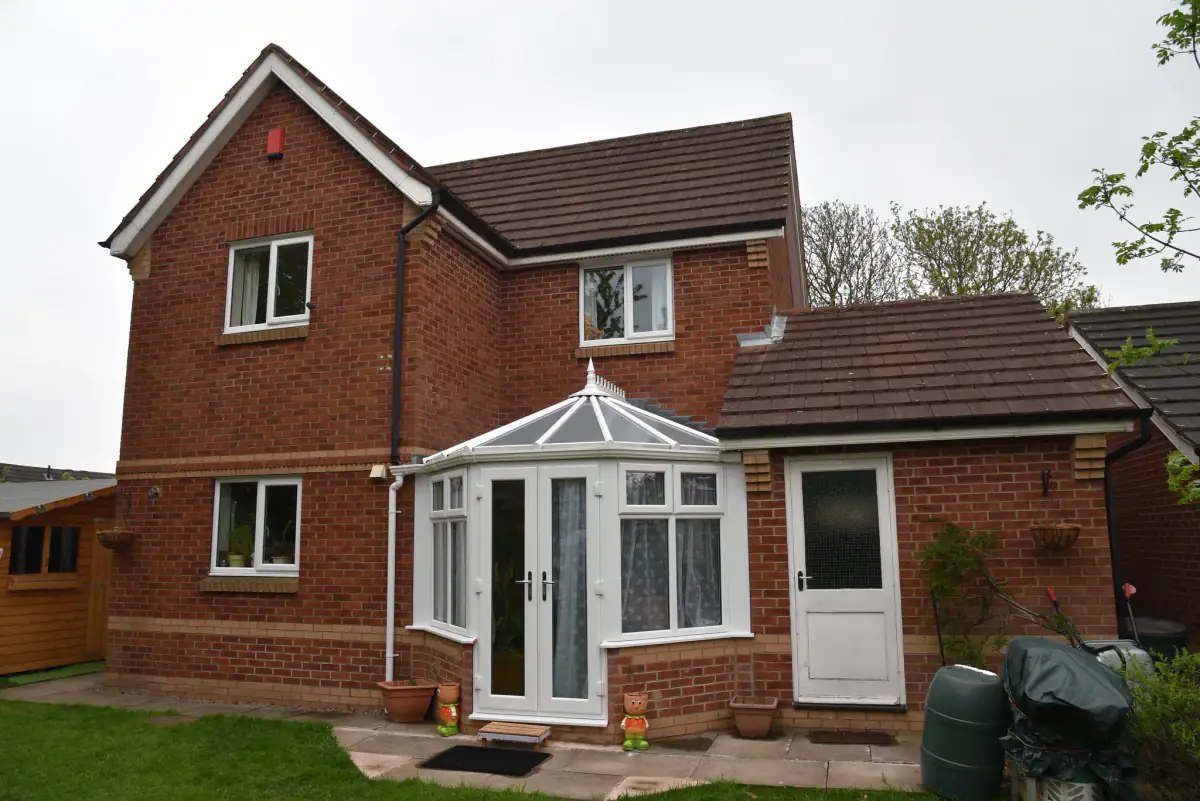
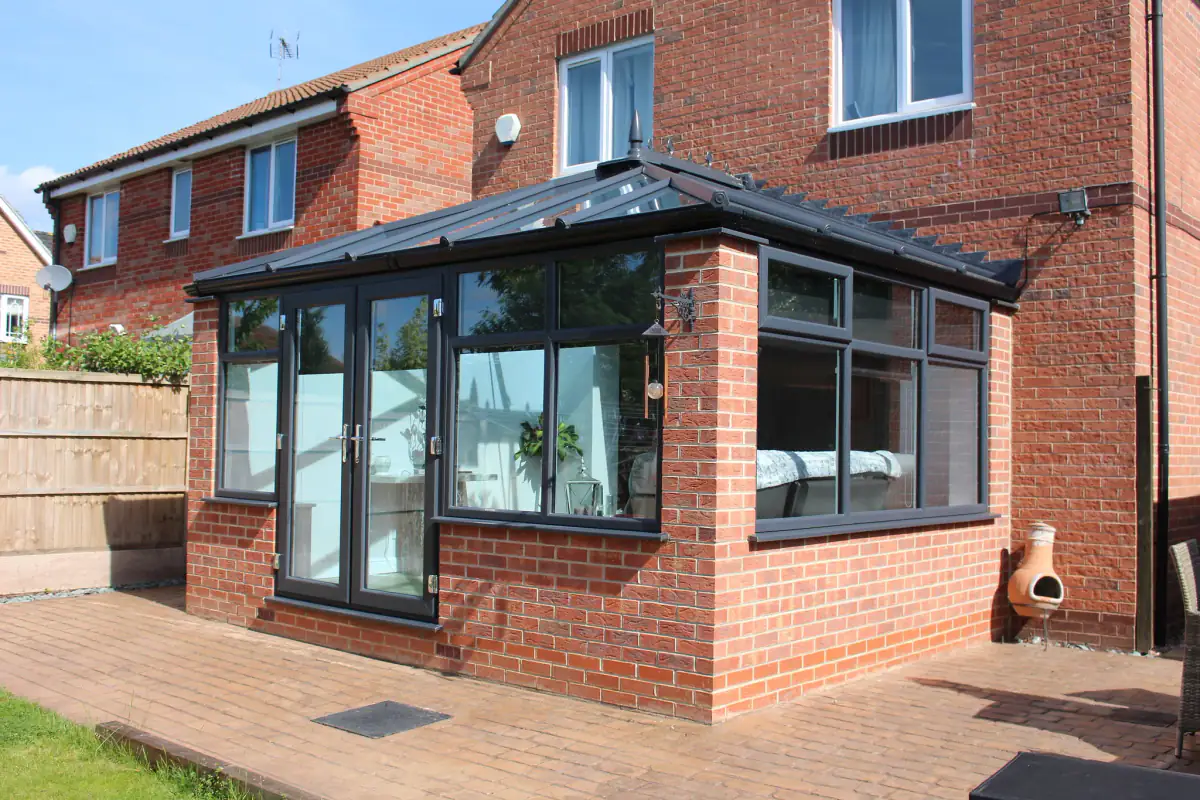
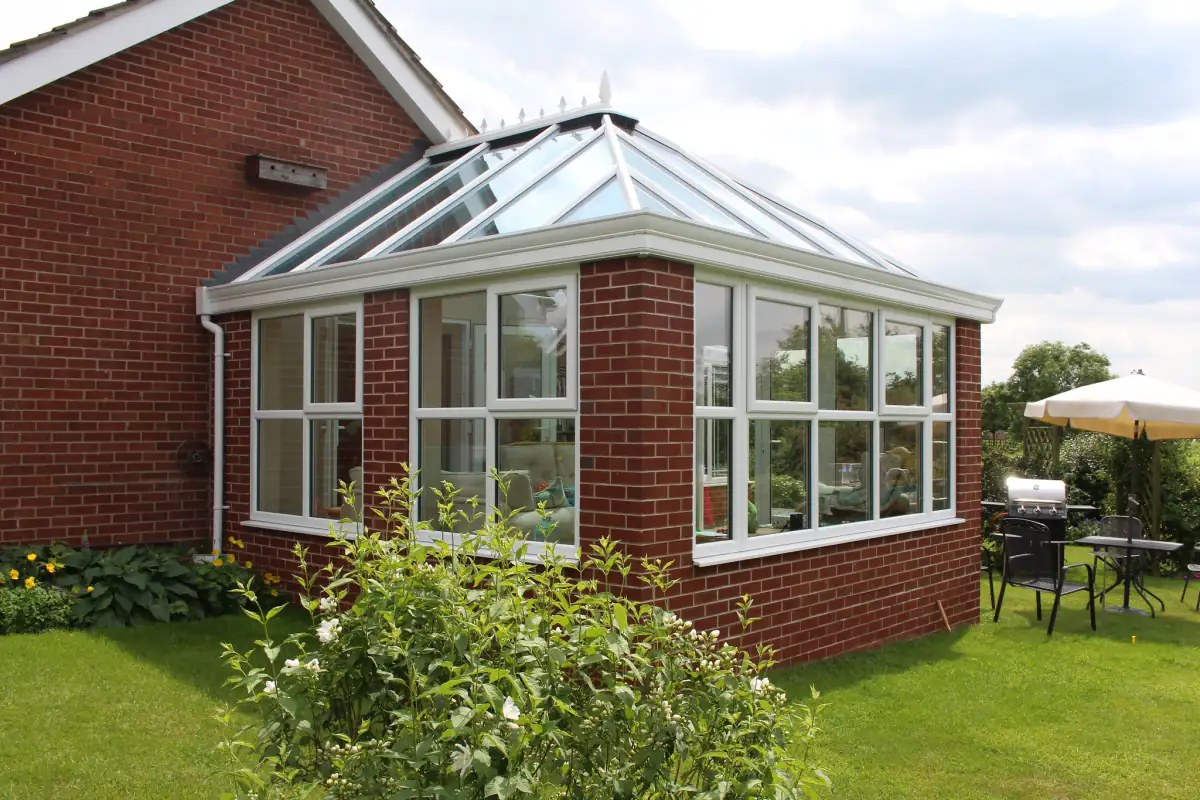
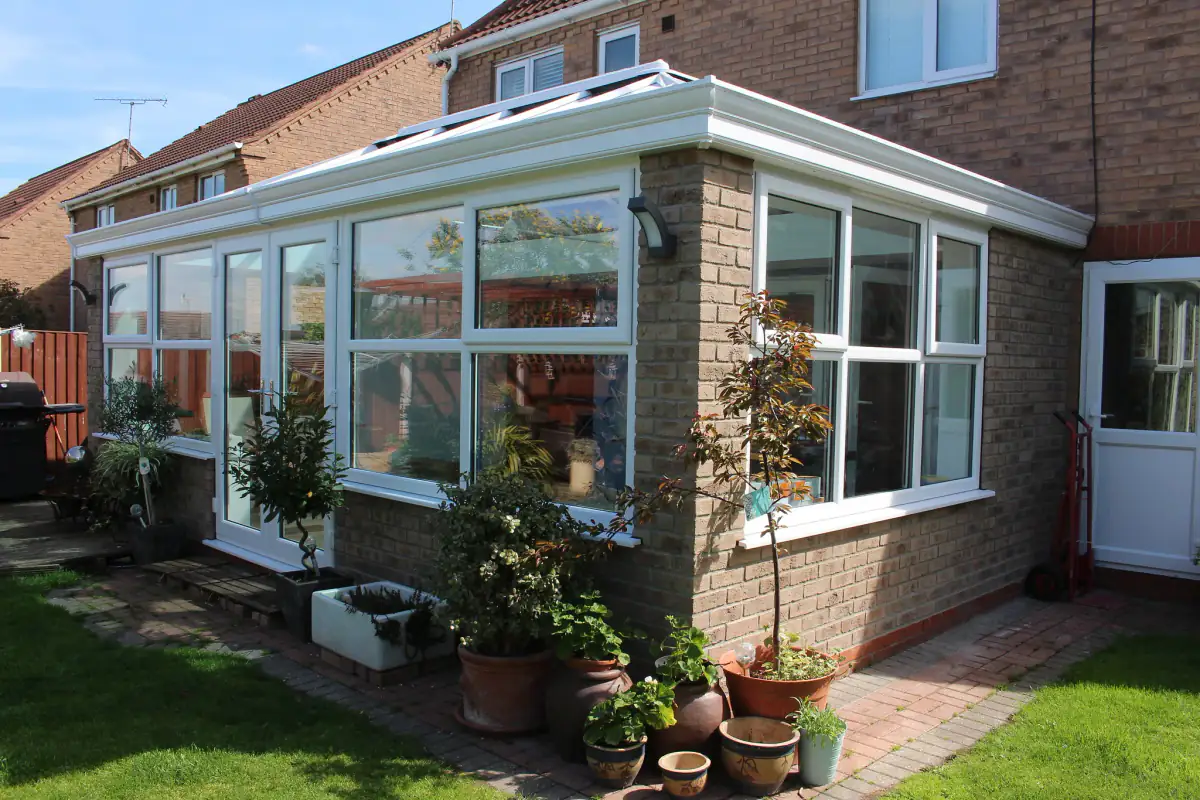
This is the question people ask most when a polycarbonate roof starts to fail, and for most households the answer is glass. Which? puts it simply: polycarbonate is cheaper but less thermally efficient, can be noisier in rain and tends to let less light through. Glass costs more, partly because swapping polycarbonate for glass usually means a whole new roof frame rather than new sheets in the old bars.
Polycarbonate is still the sensible buy in some cases, and the gap between the two is smaller than sales brochures suggest on one point: heat loss.
Glass vs polycarbonate at a glance
| Glass roof | New polycarbonate roof | |
|---|---|---|
| Price, medium conservatory (about 4m x 3.5m), fitted | £3,500 to £7,000 (typically about £5,200) | £2,700 to £5,200 (typically about £3,900) |
| Heat lost (U-value, W/m²K) | 1.0 to 1.2 for performance glass | 1.3 to 1.7 for 25mm to 35mm sheet (up to about 2.4 for 16mm) |
| Sun’s heat let in through the roof | 18% to 70%, depending on glass grade and tint | 8% to 63%, from Solarguard tint to clear |
| Time on site | 2 to 4 days | 1 to 2 days |
| Building regulations | Usually exempt when like for like | Exempt when like for like |
| Lifespan | 25 years plus | 10 to 20 years |
| Daylight through the roof | The most of any roof, with a view of the sky | Good when new but less than glass, and falls as sheets discolour |
| Rain noise | Moderate: quieter than polycarbonate, louder than tiled | Loudest of any roof |
Prices are our site-wide ranges for a medium conservatory (about 4m x 3.5m) across lean-to, Edwardian, Victorian and gable shapes, fitted; installers usually quote including VAT, but check. U-values and solar figures come from Ultraframe’s published data for its performance glass and its 25mm and 35mm polycarbonate. An old standard double glazed roof is rated at U 2.8 and lets in about 75% of the sun’s heat, which is why a modern glass roof is a different product from the one many conservatories were built with.
Which is warmer in winter?
Modern glass, but by less than you might expect. Ultraframe rates its standard performance glass at 1.2 and its best glass at 1.0. It rates its 35mm polycarbonate at 1.3 and its 25mm sheet at 1.7. So the best polycarbonate is close to standard performance glass on paper, while thin sheet (16mm or 10mm) is much worse, at around 2.4 to 2.8.
Watch out for old glass. A standard double glazed roof unit is rated at 2.8, worse than good polycarbonate. If you are comparing quotes, ask for the U-value of the exact glass or sheet being offered rather than assuming glass is always warmer. Both roofs lose several times more heat than an insulated tiled roof at 0.15, so neither will make a conservatory as warm as the house in January. Our guide to polycarbonate thickness compares the sheets.
Which stays cooler in summer?
It depends on the grade you buy more than on the material. Ultraframe’s performance glass lets through anywhere from 70% of the sun’s heat (clearest standard grade) down to 18% (best tinted grade). Its 25mm polycarbonate lets through 63% when clear, 37% in opal, 26% in bronze and 8% in its Solarguard tint.
The difference is what you give up to cut the heat. Dark polycarbonate tints block light along with heat. Solar control glass is designed to reflect heat while keeping more of the light. Ultraframe advises high solar rejection glass for south and west facing conservatories and clearer glass for north and east facing ones, and the Glass and Glazing Federation gives similar advice. If overheating is your main problem, read our page on a conservatory that is too hot before choosing either.
Which lets in more light?
Glass. Which? says polycarbonate tends to let less light through than glass. Clear 25mm polycarbonate lets through about 68% of visible light when new, and opal and bronze sheets far less. Multiwall sheets also discolour over time: ExpertSure puts polycarbonate’s life at around 10 to 15 years before that happens. Glass keeps its clarity and gives you a view of the sky, which is the main reason people choose it.
Which is quieter in the rain?
Glass. No independent decibel tests of conservatory roofs were found, but the reports all point the same way. Which? says polycarbonate can be noisier, particularly in rain. One installer describes polycarbonate as extremely noisy in rain and hail and glass as significantly quieter, and ExpertSure says glass is quieter than polycarbonate but louder than a tiled roof. See our page on a noisy conservatory roof for other fixes.
Cost and value for money
Our typical figures are about £5,200 for glass and £3,900 for polycarbonate on a medium conservatory. The Federation of Master Builders puts a glass roof at £3,000 to £5,000 and polycarbonate at £2,000 to £4,000, so every guide agrees on the order even where the numbers differ.
Much of the gap is structural. A new polycarbonate roof can go into the existing glazing bars. Glass is much heavier, so installers say most jobs need “an entirely new roof, designed specifically for glass”, with bars and tie bars sized for your area’s wind and snow loads. A homeowner on MoneySavingExpert compared a £1,700 quote to put glass into the existing bars with a £6,000 quote for a complete new roof. Make sure every quote you compare covers the same scope.
Over time glass tends to be better value because it lasts longer: 25 years plus against 10 to 20 years for polycarbonate. Glass does carry one repair cost polycarbonate does not: a sealed unit that mists between the panes has to be replaced, which ExpertSure puts at £300 to £600 per panel. Which? sums up the trade-off by suggesting that if you can afford glass, it is probably worth the extra. See glass roof costs and polycarbonate roof costs.
Building regulations and paperwork
Both roofs normally keep a conservatory exempt from building regulations, because the roof stays translucent. The conservatory must still meet the conditions afterwards: ground level, no more than 30m², safety glazing where required, separated from the house by external doors or windows, and not heated by the house’s central heating. LABC says safety glazing rules only come into play for a reroof if the glazing units are changed, which they are with glass.
The structural point applies here too. LABC notes that frames built for a polycarbonate roof “may only have sufficient reinforcement to carry that particular load”, so a glass roof should be designed to your frames or the frames reinforced. Planning permission is usually not needed for either if the height and size stay the same.
Looks and resale
Glass looks like the better-quality product, and it is the roof most people picture on a modern conservatory. Polycarbonate looks fine when new, but buyers associate it with older, noisier conservatories, and a discoloured roof is obvious from the garden. No independent data shows how much either adds to a sale price. Neither roof needs building control paperwork when the conservatory stays exempt, so there is less to hand over when you sell.
Maintenance differs too. Self-cleaning glass breaks down dirt in daylight and lets rain wash it away, but Which? says it needs a pitch above 10 degrees to work, and it must be sealed with the right sealant rather than ordinary silicone. Polycarbonate can collect moisture and dirt in its flutes if the sheet ends are not taped, and should never be walked on.

Glass or polycarbonate: which should you choose?
- You want the room to feel bright and open and can stretch to about £5,000 or more: glass, with a coating suited to the direction the conservatory faces.
- The roof leaks and you need the cheapest fix that will last a few years: new polycarbonate, ideally 25mm or 35mm rather than thin sheet.
- You plan to sell soon: polycarbonate is usually enough, but a discoloured roof is worth replacing before photos are taken.
- The room is unbearable in summer and you do not mind losing the sky view: consider a solid roof instead; see tiled vs glass.
- Rain noise is the problem: glass is quieter, and a solid roof or insulated panels quieter still.
When you get quotes for glass, ask each installer whether the price is for a complete new roof or glass in the existing bars, what U-value and solar figure the glass has, and how long the sealed units are guaranteed for. Our guide to comparing quotes lists what else to check.
Heat lost and sun let in, side by side
Questions people ask
Can glass go into my existing polycarbonate roof frame?
Usually not. Installers and homeowners say glass is much heavier than polycarbonate and the sealed units are a different thickness with different fittings, so most jobs need a new roof designed for glass. One MoneySavingExpert thread contrasts a £1,700 quote to glaze the existing bars with a £6,000 quote for a complete new roof, so check what each quote includes.
Is polycarbonate safer than glass on a conservatory roof?
Polycarbonate is very hard to break: Ultraframe says it is up to 200 times stronger than glass and virtually shatterproof. Glass roofs use toughened, double glazed safety glass, which is designed to break safely. Neither roof should be walked on.
Do I need building regulations to swap polycarbonate for glass?
Normally not. Because the roof stays translucent, the conservatory can keep its exemption, provided the glazing meets the safety glazing rules and it stays at ground level, no more than 30m² and separated from the house. LABC warns that frames built for polycarbonate may only be strong enough for that load, so the installer should check them.
Is self-cleaning glass worth it on a conservatory roof?
It reduces cleaning but does not end it. Which? says self-cleaning coatings need a roof pitch of more than 10 degrees to work well, and 10% of conservatory owners in its April 2026 survey said their glass was hard to keep clean.
Does tinted polycarbonate keep a conservatory cooler than glass?
Dark tints can. Ultraframe's Solarguard polycarbonate lets through about 8% of the sun's heat, less than most glass. The trade-off is much less daylight, whereas solar control glass is designed to cut heat while keeping more light.
Sources
- Which?: Conservatories common pitfalls (April 2026 member survey)
- Which?: Conservatory prices
- Which?: How to keep a conservatory cool
- Ultraframe glass roof technical guide
- Federation of Master Builders: Conservatory costs
- Vivaldi: Replacing a polycarbonate conservatory roof with glass
- MoneySavingExpert forum: Replacing polycarbonate conservatory roof with glass
- LABC guidance on solid roofs to conservatories (2018 addendum)
- Planning Portal: Conservatories and building regulations
- Glass and Glazing Federation: Conservatories and energy efficiency
- Pilkington Activ self-cleaning glass
- ExpertSure: Conservatory roof problems
- MyJobQuote: Conservatory roof replacement cost (2026 guide)
- ExpertSure: Conservatory roof replacement cost UK 2026
Written by the Conservatory Roof Guide team
We research every figure from named sources: manufacturers' data, Met Office, HM Land Registry, LABC and published UK price guides. How we compare.
Reviewed by Zaib Khan
Founder of Conservatory Roof Guide. His team has handled 9,000+ conservatory roof quote requests from UK homeowners.