The short answer
- Choose tiled if the room is too hot in summer or too cold in winter: an insulated tiled roof has a U-value of about 0.15 to 0.18, against 1.0 to 1.2 for modern performance glass.
- Choose glass if the conservatory, or the room behind it, depends on roof light: solar control glass still lets in 18% to 70% of the sun's heat, depending on grade and tint.
- For a medium conservatory expect about £7,400 to £12,100 for tiled and £3,500 to £7,000 for glass, fitted. Installers usually quote including VAT, but check. See roof prices by type.
- A tiled roof needs building regulations approval. A like for like glass roof on an exempt conservatory usually does not.
- Want both? A hybrid roof puts glazed panels into an insulated tiled roof.
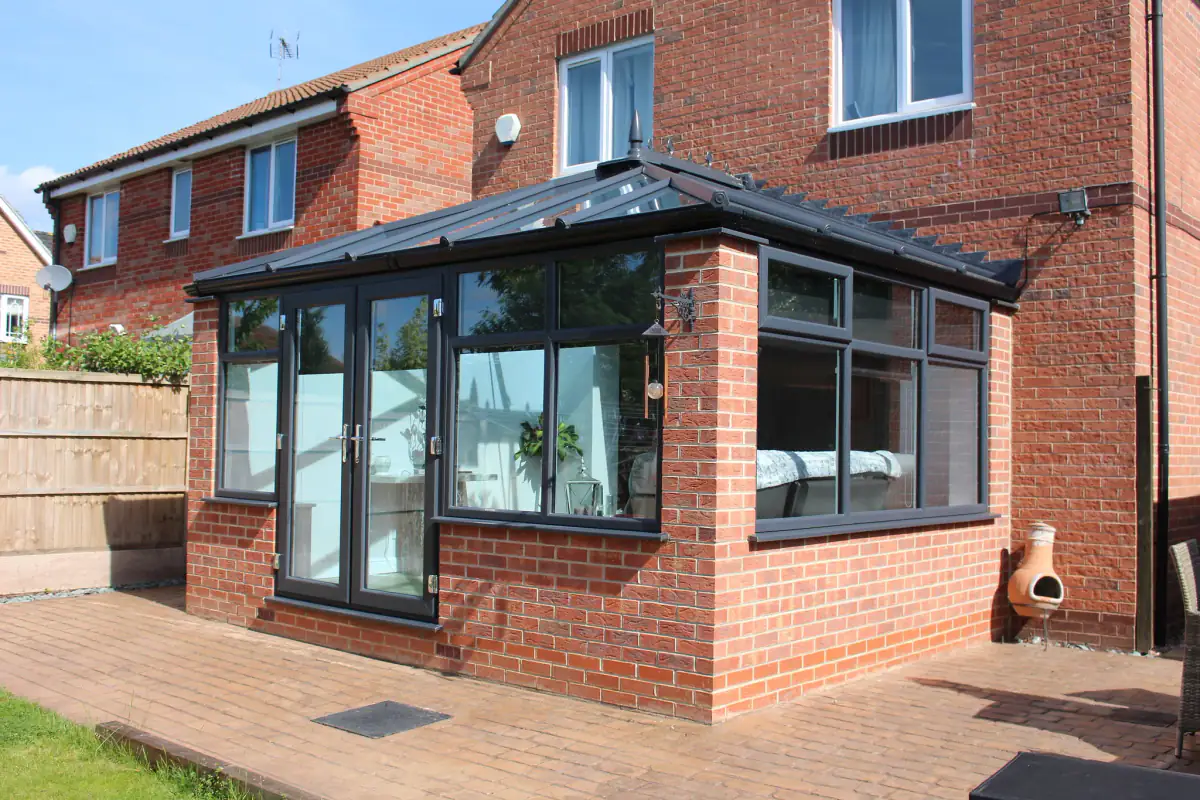
For most people who want a room they can use every month of the year, a tiled roof wins. It keeps far more heat in, stops the sun heating the room through the roof, and turns heavy rain into a background noise. Glass wins if light is the point of the room: modern solar control glass is far better than the roofs of 20 years ago, costs less than tiles and usually needs no building regulations application.
The rest of this page sets the two side by side on the things that decide it: winter warmth, summer heat, daylight, noise, cost, paperwork and looks.
Tiled vs glass roof at a glance
| Tiled roof | Glass roof | |
|---|---|---|
| Price, medium conservatory (about 4m x 3.5m), fitted | £7,400 to £12,100 (typically about £9,600) | £3,500 to £7,000 (typically about £5,200) |
| Heat lost (U-value, W/m²K) | 0.15 to 0.18 (0.12 to 0.13 versions for Scotland and Wales) | 1.0 to 1.2 for performance glass |
| Sun’s heat let in through the roof | None, apart from any roof windows | 18% to 70%, depending on glass grade and tint |
| Time on site | 3 to 6 days | 2 to 4 days |
| Building regulations | Approval needed | Usually exempt when like for like |
| Lifespan | 25 years plus | 25 years plus |
| Daylight through the roof | Low: light comes through the side windows unless you add roof windows | The most of any roof |
| Rain noise | Quietest | Quieter than polycarbonate, louder than tiled |
Prices are our site-wide ranges for a medium conservatory (about 4m x 3.5m) across lean-to, Edwardian, Victorian and gable shapes, fitted; installers usually quote including VAT, but check. U-values and solar figures are manufacturers’ published data, mainly Ultraframe’s glass roof guide and the solid roof makers’ own specifications. For comparison, a standard double glazed roof unit of the kind many older conservatories have is rated at U 2.8 and lets in about 75% of the sun’s heat.
Which is warmer in winter?
A tiled roof, by a wide margin. The U-value measures how much heat escapes through each square metre, and lower is better. A new solid roof in England has to meet 0.15 W/m²K under Approved Document L, and the main systems quote 0.15 as standard. The best performance glass is rated at 1.0, and standard performance glass at 1.2. On those figures a square metre of tiled roof loses roughly a sixth of the heat of the best glass, or less.
Be realistic about what the roof alone can do. The walls, windows and floor still lose heat. One homeowner on PistonHeads said their room was still “colder than the rest of the house by a couple of degrees” in winter after a solid roof went on, and MoneySavingExpert posters found comfort also depended on insulating the dwarf walls and floor. Heating matters too: running the house’s central heating into the conservatory ends its building regulations exemption, so most owners use a heater with its own controls. There is more on this in our guide to fixing a cold conservatory.

Which stays cooler in summer?
Again tiled. Which? warns that the more glass there is in the roof, the greater the chance of overheating, and says south-facing conservatories without shade are the most prone. In its April 2026 survey of 3,037 members, “the temperature is difficult to regulate” was the most common conservatory regret, named by 24%.
A tiled roof lets no sun through at all, apart from any roof windows you choose. Glass lets some through, and how much depends on the grade you buy. Ultraframe’s figures run from 70% for its clearest standard performance glass down to 18% for its best tinted solar control glass. That spread is why the choice of glass matters as much as the choice of roof. Ultraframe advises high solar rejection glass for south and west facing rooms and clearer glass for north and east facing ones, and the Glass and Glazing Federation gives similar advice.
You will see installers quote summer temperatures of 40°C or more under old roofs. Those are marketing claims without published data behind them, and no independent study measuring room temperatures under different roof types was found. Our page on a conservatory that gets too hot covers cheaper fixes too.
How much light will you lose with a tiled roof?
A lot through the roof itself, which is the main reason people hesitate. Which? says glass roofs are the most common precisely because they bring in more light. Homeowners on MoneySavingExpert warned that rooms which borrow light through the conservatory, often a kitchen or living room, can become noticeably darker after a solid roof goes on.
Light still comes through the side windows and doors, and you can win some back. Most tiled systems take roof windows, and some take fixed glazed panels. In England a new roof window must reach a U-value of 1.4 (or Window Energy Rating Band B) and a rooflight 2.2, so each one adds a little heat loss. If daylight worries you, look at a hybrid roof or our guide to light in a solid roof.
Which is quieter in the rain?
Tiled. No independent decibel tests of conservatory roofs were found, so this rests on consistent reports rather than measurements. Guardian says its roof reduces rain noise, ExpertSure describes glass as quieter than polycarbonate but louder than tiles, and homeowners who swapped to a solid roof on MoneySavingExpert reported much less rain noise. A glass roof is not loud in the way a polycarbonate one is, so if noise is your only complaint, either will be a big step up from polycarbonate.
Cost and value for money
On our figures a tiled roof typically costs about £4,400 more than glass for a medium conservatory (around £9,600 against £5,200), and plastering, lighting and any structural work can push a tiled quote higher. MyJobQuote’s 2026 guide puts internal finishing for a solid roof at £500 to £2,000 and building control fees at around £200 to £400, so check what each quote includes. See tiled roof costs and glass roof costs for more detail.
Glass has its own running costs. A sealed unit that mists between the panes cannot be repaired, and ExpertSure puts a replacement at £300 to £600 per panel. Self-cleaning coatings cut the cleaning, but only on roofs pitched above about 10 degrees.
Do not buy either roof expecting it to pay for itself. Guardian cites modelling by AECOM showing “more than £200 per year” saved, but that was for an electrically heated conservatory. Against the £6,144 average roof replacement Which? members reported in 2026, that is roughly 30 years of simple payback. The value is in a room you use more, not in the bills.
Building regulations and paperwork
This is the biggest practical difference. LABC, which represents council building control in England and Wales, says that replacing a translucent roof with a solid one needs a building regulations application. Building control will check that the frames carry steel reinforcement (by drilling pilot holes or using a magnet), that the foundations are adequate, often with a trial hole, and that the new roof meets 0.15 W/m²K in England, 0.13 in Wales or 0.12 in Scotland. You should receive a completion certificate, usually within eight weeks of the work finishing. Keep it: a buyer’s solicitor will ask for it.
A glass roof replacing another glazed roof is usually exempt, as long as the conservatory still meets the exemption afterwards: ground level, no more than 30m², safety glazing where needed, separated from the house by external doors, and not heated by the house’s central heating. Glass is heavier than polycarbonate, though, so swapping a polycarbonate roof for glass usually means a new roof frame designed for glass.
Planning permission is usually not needed for either if the conservatory keeps its size and height, but listed buildings, flats and areas with Article 4 directions are different. Scotland has its own rules and most roof replacements there need a building warrant. Our building regulations guide goes through each case.
Looks and resale
Which? says a tiled roof makes a conservatory feel more like an extension. Inside you get a flat or vaulted plastered ceiling with spotlights; outside, lightweight tiles or slate-effect finishes that can be chosen to sit well with the house roof. Glass keeps the classic conservatory look and the view of the sky, which some buyers want and others see as the reason the room goes unused.
There is no independent data on how much either roof adds to a house price. One installer claims an approved solid roof can add 5% to 7%, which is unverified. What is clear is that paperwork matters on sale: without a completion certificate for a tiled roof you may face delays, a regularisation application or a buyer asking for indemnity insurance. Energy ratings changed in August 2026 too. An assessor now records a conservatory with a replaced roof as an extension, and a pitched roof with no evidence of insulation is entered as uninsulated, so keep the roof specification as well as the certificate.
Tiled or glass: which should you choose?
- The room is too hot in summer and too cold in winter, and you want to use it all year: tiled. It is the only one of the two that fixes both.
- It faces north or east, you mainly use it by day and you love the sky view: glass, with a clearer, low emissivity grade.
- It faces south or west but you want to keep a glazed roof: glass with high solar rejection, and budget for blinds or vents as well.
- A kitchen or living room behind it relies on light through the conservatory: glass, or a hybrid roof with glazed panels over the doorway.
- Your frames have no steel reinforcement or the base shows cracks: get the structure assessed before choosing either, since a solid roof may need new frames or posts.
- Your budget is under about £7,000: glass, or look at insulated panels as a cheaper way to warm the room.
When you get quotes, ask each installer to name the roof system and its U-value, say who will apply for building control and hand you the certificate, and list any frame reinforcement or structural work separately. Our guide to comparing quotes has a full checklist.
Heat lost and sun let in, side by side
Questions people ask
Can I put a tiled roof on my existing conservatory?
Usually, if the frames and base are sound. LABC says building control will check the frames contain steel reinforcement and that the foundations are adequate, and a lightweight composite roof typically adds less than 10% to the load of a glazed roof. Frames built for a polycarbonate roof may need reinforcing or replacing first.
Would better glass be enough instead of a tiled roof?
It can help. Which? says thermally efficient glass can help regulate temperature and recommends solar control, reflective or tinted glass for south-facing rooms. Keeping a glazed roof also avoids the building regulations application a solid roof needs, but it will not match a tiled roof for winter warmth.
Will a tiled roof cut my heating bills?
It depends on whether and how you heat the conservatory. Homeowners on MoneySavingExpert said savings were small and unlikely to repay the cost, and Guardian's own modelled saving, more than £200 a year, assumed an electrically heated room. Most people buy a tiled roof for comfort and a usable room rather than lower bills.
Does a tiled roof turn my conservatory into an extension?
For building regulations, LABC says significantly reducing the roof glazing ends the conservatory exemption, so the new roof must comply with current rules as a material alteration. For energy ratings, from 6 August 2026 an assessor records a conservatory with a replaced solid roof as an extension.
Is a glass roof hard to keep clean?
It can be. In an April 2026 Which? survey, 10% of conservatory owners said their glass was hard to keep clean. Self-cleaning coatings help, but Which? says they need a roof pitch of more than 10 degrees to work well.
Sources
- Which?: Conservatories common pitfalls (April 2026 member survey)
- Which?: Types of conservatory
- Which?: The mistakes that will make your conservatory overheat
- Which?: How to keep a conservatory cool
- LABC Front Door: Replacing a conservatory roof
- LABC guidance on solid roofs to conservatories (2018 addendum)
- Ultraframe glass roof technical guide
- Approved Document L, Volume 1 (2021 edition incorporating 2023 amendments)
- Guardian Warm Roof: A warmer winter with a Guardian conservatory roof
- ExpertSure: Tiled vs glass vs polycarbonate roof
- MoneySavingExpert forum: Solid conservatory roof opinions and experiences
- BRE: RdSAP Conventions v12.2
- MyJobQuote: Conservatory roof replacement cost (2026 guide)
- ExpertSure: Conservatory roof replacement cost UK 2026
Written by the Conservatory Roof Guide team
We research every figure from named sources: manufacturers' data, Met Office, HM Land Registry, LABC and published UK price guides. How we compare.
Reviewed by Zaib Khan
Founder of Conservatory Roof Guide. His team has handled 9,000+ conservatory roof quote requests from UK homeowners.