The short answer
- A warm roof is a lightweight, insulated solid roof system designed to replace a conservatory's glass or polycarbonate roof. The main systems are Guardian, SupaLite, Leka, Ultraframe LivinRoof and Eurocell Equinox.
- Makers quote U-values of 0.12 to 0.18 W/m²K, against about 1.0 for performance glass and 1.2 to 1.7 for 25mm to 35mm polycarbonate.
- Published weights include 31kg/m² for LivinRoof and 46kg/m² for SupaLite. LABC says a lightweight composite solid roof adds only about 0.5kN/m to the load on the frames.
- It needs building regulations approval, and the frames and base are checked first.
- A tiled warm roof on a medium conservatory typically costs £7,400 to £12,100 fitted.
What is a warm roof conservatory?
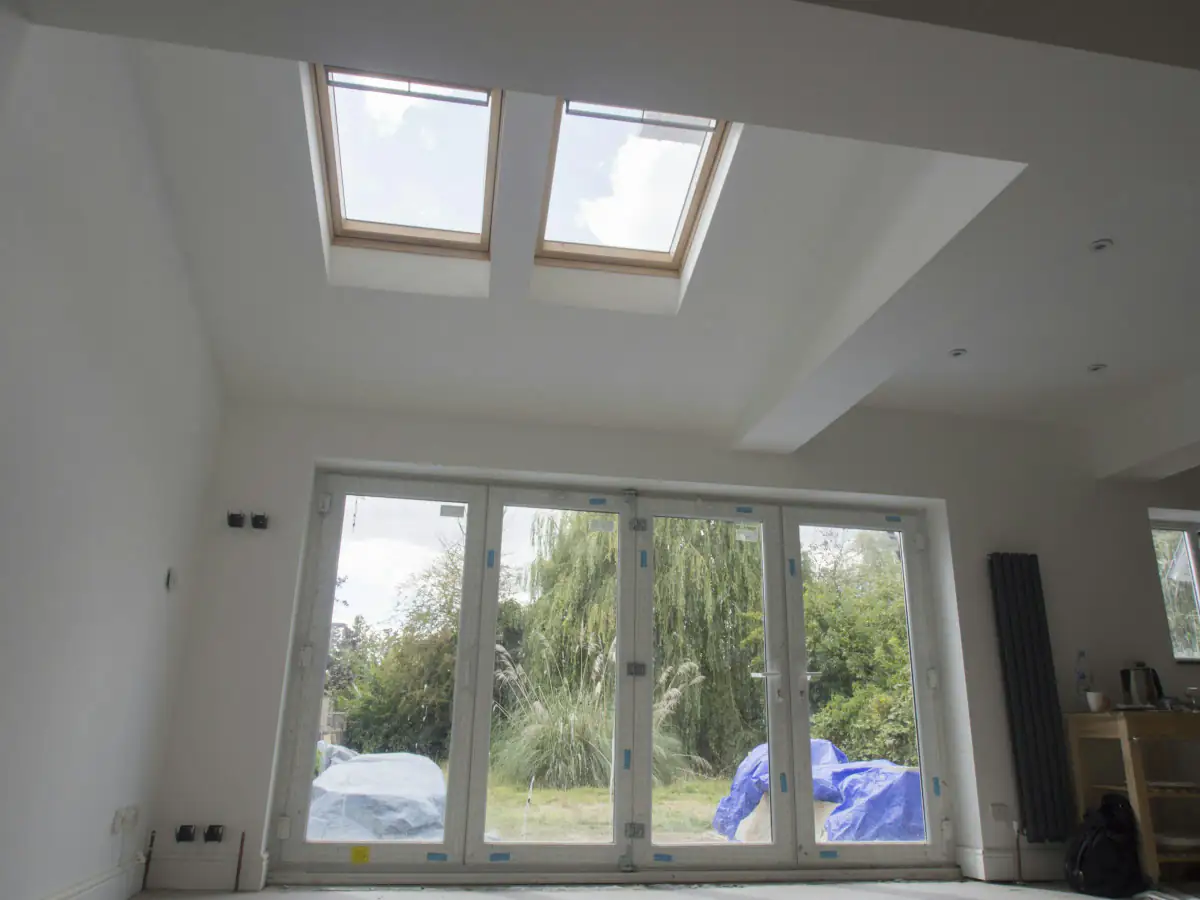
It is a conservatory whose glass or polycarbonate roof has been replaced with a lightweight, insulated solid roof system. Outside you see tiles or slates; inside you get a plastered ceiling, often with spotlights. The insulation sits within the roof build-up, so the room loses far less heat and gains far less sun.
LABC’s guidance describes the lightweight composite solid roof as the preferred option for many homeowners, and some systems hold an LABC Registered Detail, which is a pre-approved design. The term covers tiled roofs such as Guardian, SupaLite, Leka and Eurocell’s Equinox, and hybrid roofs such as Ultraframe’s LivinRoof, which can mix insulated panels with glazed ones. If you want to keep some of the sky, see hybrid roofs.
The systems are made for the usual conservatory shapes. Guardian lists Edwardian, Victorian, lean-to and gable-fronted styles and says it can make P-shaped layouts. Ultraframe says LivinRoof suits pitches from 5 to 40.9 degrees.
How a warm roof is built
A warm roof arrives as a kit designed for your conservatory. From the outside in, the layers are:
| Layer | What it does | Examples from the makers |
|---|---|---|
| Tiles or slates | The weatherproof finish that looks like a house roof | Lightweight composite, steel or recycled tiles (see our guide to lightweight roof tiles) |
| Battens | Hold the tiles | SupaLite fixes battens every 250mm |
| Breathable membrane | Keeps rain out while letting moisture escape | Guardian specifies a vapour-permeable underlay to BS 5250 |
| Deck | Boards over the rafters | Exterior plywood (Guardian), 18mm OSB3 (later Equinox versions), Leka’s own outer boards |
| Insulation | The part that makes it warm | 100mm PIR board (SupaLite), 130mm (Leka), 90mm plus a 25mm layer (LivinRoof) |
| Frame | Carries the roof down to the side frames | Aluminium (Guardian, SupaLite), plastic composite GRP with no aluminium, steel or timber (Leka), a glazed-roof chassis with steel stiffeners (LivinRoof) |
| Vapour control | Stops warm, moist room air reaching cold layers | Foil-backed insulation with taped joints. Leka foams and tapes every joint “to create a solid vapour seal”. |
| Ceiling | The finished room | Foil-backed or insulated plasterboard with a skim coat |
Round the top of the side frames sits a ring beam that carries the roof, and at the house wall a wall plate or box gutter.
Can a conservatory have a solid roof?
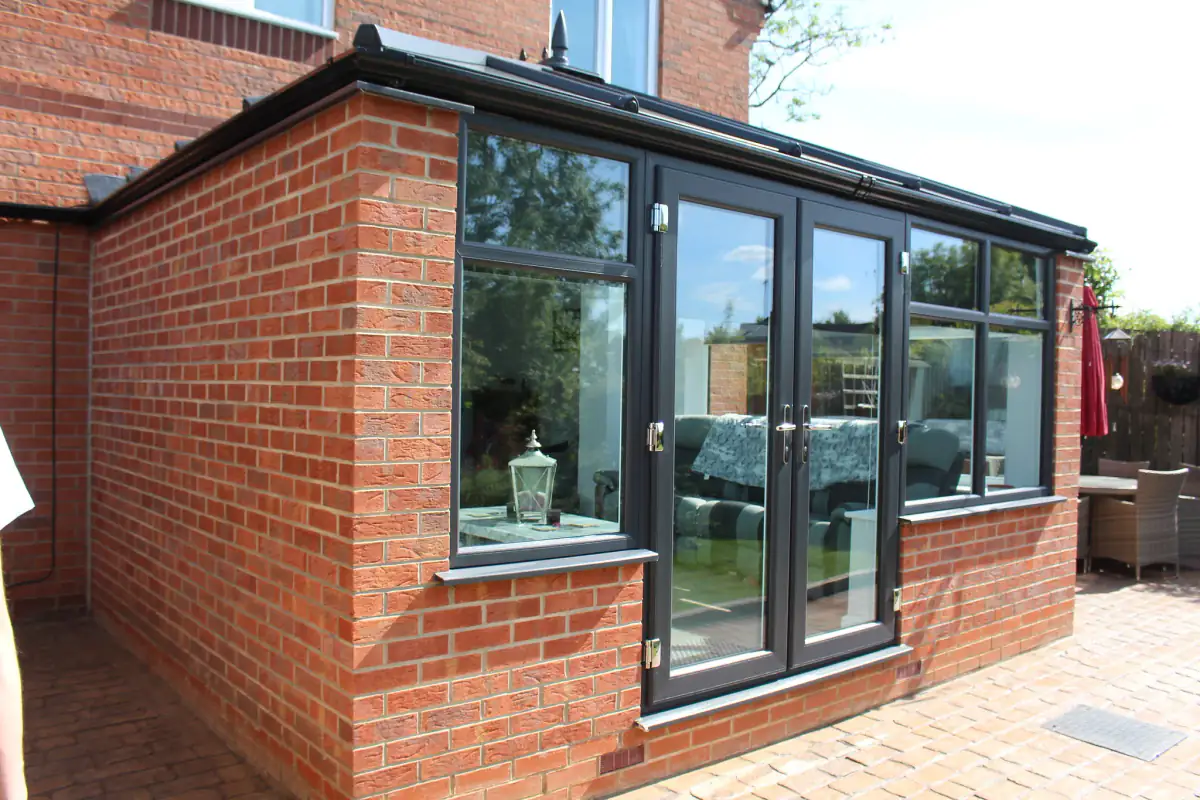
Usually, yes, if the frames and base are up to it. LABC says most existing conservatories can support the extra load of a lightweight solid roof, but building control checks for steel reinforcement in the frames, adequate foundations and signs of movement. Where frames are unreinforced, new windows or structural posts may be needed.
Weight is the reason these roofs are “lightweight”. Ultraframe says LivinRoof “weighs only 31kg/m²”. SupaLite states 46kg per m², varying by style, while one of its installers quotes about 40. Leka’s installer guide says its roof is a “similar weight, or lighter than a glass roof”. LABC’s guidance puts the load of a typical glazed roof on the frames at under 10kN/m and says a lightweight composite solid roof is only likely to add about 0.5kN/m.
Guardian says its roof can go on full-height frames, or frames with plastic panels, if they are fully reinforced. Our guide on whether your conservatory can take a solid roof covers the survey.
How warm is a warm roof?
It keeps far more heat in than glass or polycarbonate. Makers quote U-values of 0.12 to 0.18 W/m²K, against about 1.0 for performance glass and 1.2 to 1.7 for 25mm to 35mm polycarbonate. The room as a whole still depends on the walls, windows, floor and how you heat it.
MoneySavingExpert posters who converted reported a room they could use all year. One found theirs cooler in summer but still needing constant heating in winter, and others said the result depends on insulating the windows, dwarf walls and floor too. In summer the solid roof lets almost no sun through, and owners who converted said it evened out the hot and cold swings. Which? warns that the more glass in a roof, the greater the chance of overheating.
Condensation depends on the build. Guardian says its system is fully ventilated and BRE tested for condensation risk inside the structure. The LivinRoof certificate asks owners to keep the room’s relative humidity below 80% through ventilation, and to keep the ceiling clean over the life of the roof. The U-values guide compares every roof type.
The main warm roof systems compared
These are the makers’ own figures, or a review site’s where noted. We have not tested the roofs.
| System | Frame | Stated weight | Stated U-value (W/m²K) | Guarantee as published |
|---|---|---|---|---|
| Guardian Warm Roof | Aluminium | Not published in our sources | 0.15 England, 0.13 Wales, 0.12 Scotland | 10-year product and 10-year workmanship. The insurance-backed cover applies to the first two years if the installer stops trading. |
| SupaLite | Aluminium spaceframe | 46kg/m² (maker), about 40 (installer) | 0.15 (installer) | Installer guarantee, length not published |
| Leka | GRP, no aluminium, steel or timber | “Similar weight, or lighter than a glass roof” | Not published | 40-year component warranty, some supplied products excluded |
| Ultraframe LivinRoof | Glazed-roof chassis with insulated panels and steel stiffeners | 31kg/m² | 0.15, or 0.12 option | 10-year parts guarantee |
| Eurocell Equinox | Not stated in our sources | Tiles 18kg/m² (ExpertSure) | 0.18 (ExpertSure) | 10-year system guarantee and 25-year tile warranty (ExpertSure) |
Installer networks differ in size. ExpertSure reports about 70 approved Guardian installers, about 40 Equinox dealers, about 35 LivinRoof dealers and about 30 SupaLite installers, while Leka says it has more than 350 trained installers.
What is a Guardian warm roof?
Guardian’s own description is a lightweight, fully insulated solid roof system that replaces a conservatory’s glass or polycarbonate roof. It is sold through certified fabricators and installers, and Guardian claims over 100,000 installations in the UK and Ireland, building control approval since 2006 and a U-value of 0.15 W/m²K in England.
It is the best-known name, and the recurring theme in reviews of the maker is the gap between Guardian and the independent firms that sell and guarantee the work. Guardian Building Systems had a Trustpilot score of 3.3 from 21 reviews when we checked on 27 September 2026. Low-star reviews mention difficulty getting building control paperwork, installers ceasing to trade, enforcing guarantees, tile fading and condensation, while individual installers trading on the Guardian name can score far higher. Our Guardian Warm Roof review goes into detail.
Warm roof vs insulated panels and linings
Insulated aluminium panels slot into the existing glazing bars in place of the polycarbonate, and makers say a typical install takes a day. They quote 0.29 W/m²K, measured at the centre of the panel. They cost less, at £1,800 to £4,600 for panels or an internal lining on a medium conservatory on our figures, but the old frame, bars and ridge stay, and those lose heat faster than the panels.
A clad-over or wrap-over roof, fitted over the top of the existing roof, is a different product again. SupaLite and Leka both warn it adds weight to a structure designed for a lighter roof, and PanelX says it can bring condensation and heat loss problems. Neither route avoids building regulations on LABC’s reasoning. Compare the options on our insulated panels page.
Warm roof conservatory pros and cons
Pros
- Far less heat lost through the roof than glass or polycarbonate.
- Cuts overhead sun and glare in summer.
- Much quieter in rain, according to owners who have converted.
- A plastered ceiling with spotlights, and a roof that looks like part of the house.
- Roof windows or glazed panels can be added for light.
Cons
- The dearest of the common roof-only options.
- Less daylight, including in any room behind the conservatory.
- Needs building control approval, and sometimes frame or base work.
- The room can still be cold if the walls, windows and floor are poorly insulated.
- Real-world lifespans beyond about 20 years are not yet proven, since Guardian and SupaLite date from 2006 and 2012.
How much does a warm roof conservatory cost?
On our researched prices, a tiled warm roof on a medium conservatory of about 4m x 3.5m costs £7,400 to £12,100 fitted, typically £9,600. A hybrid warm roof with glazed panels runs £6,600 to £12,600. Installers usually quote including VAT, but check, and budget separately for any frame or base repairs.
Other published figures vary. SupaLite gives guide prices of about £1,000 plus VAT per m², the Federation of Master Builders puts a solid roof at £4,000 to £6,000, and ExpertSure at £6,100 to £15,000. Roof windows add roughly £450 to £2,000 each and a set of spotlights £300 to £600. The tiled roof cost guide breaks prices down by size and style.
When you get quotes, ask each installer which system they fit, whether they are approved by its maker, the U-value calculation for your roof, and exactly who backs each guarantee.
Questions people ask
Does a warm roof need building regulations approval?
Yes. LABC says replacing a translucent roof with a solid one needs a building regulations application, and that applies to every lightweight warm roof system. An LABC Registered Detail or a private approver's type approval speeds the process up but does not remove it.
Do warm roofs cause condensation?
A properly built warm roof uses foil-backed insulation with taped joints as a vapour seal, plus ventilation, to stop condensation inside the structure, and Guardian says its system has been BRE tested for interstitial condensation risk. Condensation still appears in some Guardian reviews, and the LivinRoof certificate asks owners to keep the room's humidity below 80% with good ventilation.
Can I have skylights in a warm roof?
Yes. Guardian offers VELUX and its own Solstice roof windows, and SupaLite installers offer Velux windows and SkyVista rooflights. Guardian says its roof windows need a pitch of at least 15 degrees, and published prices run from about £450 to £2,000 per window or glazed panel.
How long does a warm roof take to fit?
Makers quote 2 to 3 days for Guardian and Leka and 3 to 5 days for SupaLite, with ExpertSure reporting up to 5 to 7 days for a Victorian or P-shaped Equinox roof. Leka's figure includes removing the old roof, and a SupaLite installer's includes a day for plastering.
Is a warm roof the same as a tiled roof?
Mostly. Guardian, SupaLite, Leka and Equinox are tiled warm roofs. Ultraframe's LivinRoof is a hybrid that can mix insulated solid panels with glass panels in almost any position, and it can have aluminium or composite external panels instead of tiles.
Sources
- LABC guidance on solid roofs to conservatories (May 2018 addendum)
- LABC Front Door: I want to replace my conservatory roof
- Guardian Building Systems: FAQ
- Guardian Building Systems: consumer promise
- Guardian Warm Roof installation guide
- SupaLite: tiled roof
- Leka: the Leka system
- Leka solid roof installer guide
- Ultraframe: LivinRoof
- Ultraframe LivinRoof LABC Registered Detail certificate
- ExpertSure: Equinox roof review
- ExpertSure: Guardian Warm Roof review
- ExpertSure: LivinRoof review
- ExpertSure: SupaLite vs Guardian roof
- Construction Update: new Eurocell Equinox solid roof
- SupaLite: conservatory roof replacement cost
- Trustpilot: Guardian Building Systems
- SupaLite: the importance of building control
- PanelX: building regulations for conservatory roofs
- MoneySavingExpert forum: replacing conservatory roof
Written by the Conservatory Roof Guide team
We research every figure from named sources: manufacturers' data, Met Office, HM Land Registry, LABC and published UK price guides. How we compare.
Reviewed by Zaib Khan
Founder of Conservatory Roof Guide. His team has handled 9,000+ conservatory roof quote requests from UK homeowners.