The short answer
- Insulated linings and panels cost about £1,800 to £4,600 for a medium conservatory on our figures, and some lining firms advertise from around £1,600. A tiled roof costs about £7,400 to £12,100.
- Linings are usually fitted in a day. They block the sun and cut rain noise, but the performance claims (including U-values of 0.17 to 0.18 for the quilt) are the firms' own, not independent tests.
- The old roof stays above the lining, so leaks, condensation in the gap and a lower ceiling are the main risks. Ultraframe warns linings can damage glazing bars and trap heat.
- Some firms say no approval is needed, but LABC's view is that underdrawing a polycarbonate roof ends the conservatory exemption. Ask building control first.
- A tiled roof replaces the whole roof to 0.15 to 0.18 W/m²K and comes with a completion certificate.
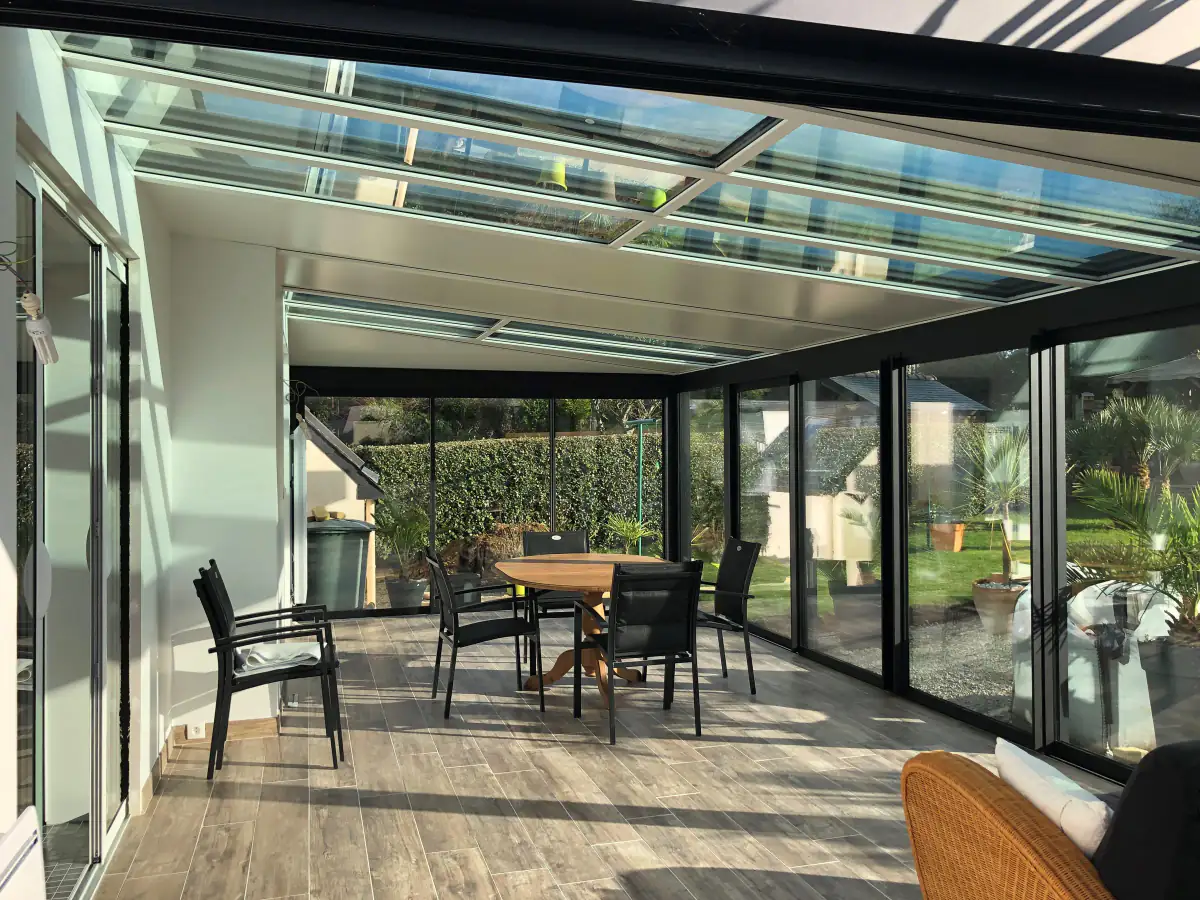
“Insulate or replace?” is a question many conservatory owners ask, and the answer turns on one thing: the state of the roof you already have. An internal insulation kit, usually called an insulated ceiling or lining, is fixed underneath the existing glass or polycarbonate roof. The old roof keeps the rain out; the lining keeps the heat in and the sun and noise out. If the old roof is sound, that can be a lot of comfort for the money. If it is leaking or failing, you are hiding the problem rather than fixing it.
A new tiled roof costs about three times as much on our typical figures, but it removes the old roof completely and replaces it with an insulated structure that building control signs off.
Insulation kit vs new roof at a glance
| Internal insulation kit (lining) | New tiled roof | |
|---|---|---|
| Price, medium conservatory (about 4m x 3.5m) | £1,800 to £4,600 for linings and panels (typically about £3,100); some firms advertise from around £1,600 | £7,400 to £12,100 (typically about £9,600) |
| Heat lost (U-value, W/m²K) | Not independently tested; our working range is 0.25 to 0.5, and some firms claim 0.17 to 0.18 for the quilt alone | 0.15 to 0.18 (0.12 to 0.13 versions for Scotland and Wales) |
| Sun’s heat let in through the roof | None | None, apart from any roof windows |
| Time on site | 1 to 3 days; many firms say one day | 3 to 6 days |
| Building regulations | Depends on the system; LABC’s reasoning suggests approval is needed | Approval needed |
| Lifespan | 15 to 25 years on our working range; guarantees of 5 to 10 years | 25 years plus |
| Ceiling finish | uPVC cladding or plaster, a few centimetres below the old roof | Plastered ceiling with spotlights |
| The old roof | Stays in place above | Removed |
| Rain noise | Much quieter | Quietest |
Prices are our site-wide ranges for a medium conservatory across lean-to, Edwardian, Victorian and gable shapes, fitted; installers usually quote including VAT, but check. The lining range covers internal linings and panels fitted within the existing frame. The advertised starting prices are from Conservatory Roof Insulation Ltd (from £1,590), Comfy Conservatories (from £1,680 for 12m²) and Conservatory Insulations UK (from £1,699); not all say what size that buys.
What an insulation kit actually is
Most professionally fitted systems follow the same pattern. Timber battens or sub-frames are fixed to the existing rafters, a multi-layer foil quilt is fitted between them, and the ceiling is finished with white uPVC cladding or, from some firms, plasterboard and a skim. CI Group’s system has several foil and wadding layers under a uPVC tongue and groove finish; Conservatory Roof Insulation Ltd sandwiches a 19-layer foil quilt between two timber frames with an air gap for ventilation. DIY versions use the same kind of multifoil, which retailers sell by the roll.
Which is warmer in winter?
The new roof, as far as anyone can prove. A tiled roof is built to meet 0.15 W/m²K, the figure Approved Document L sets for a new roof in England, and building control checks it. Lining firms quote 0.17 or 0.18 for their insulation quilt, but those are the firms’ own figures for the material, not a calculation for the whole ceiling, and CI Group publishes no U-value at all. Our working range for panels and linings is 0.25 to 0.5.
Be wary of percentage claims such as “90% warmer in winter” or “block up to 97% of radiant heat”. None of the firms making them published the test behind them, and the Advertising Standards Authority has ruled against similar unsubstantiated insulation claims from other companies. Homeowners on MoneySavingExpert who insulated their roofs reported a more usable room but negligible energy savings.
Which stays cooler in summer?
Both block the sun completely, which is the main cause of overheating. The difference is what happens above the ceiling. With a lining, the sun still heats the old roof and the air trapped beneath it, and Ultraframe warns that linings can trap heat. A tiled roof has no glazed layer above the insulation to heat up. Either will feel far cooler than a bare glass or polycarbonate roof.
How much light will you lose?
With either, all of the light through the roof. The lining makes the roof opaque from the inside, although CI Group says it can include viewing panels. A tiled roof can take roof windows. Rooms behind the conservatory will be darker either way, so check which rooms borrow its light.

Which is quieter in the rain?
The new roof is the quietest option. A lining makes a big difference too: one firm claims an 80% noise reduction, although it publishes no measurements. The rain still drums on the old polycarbonate above; the lining just muffles it.
Cost and value for money
On our figures a lining typically costs about £3,100 for a medium conservatory and a tiled roof about £9,600. Published guides for linings vary a lot by method and size: MyJobQuote puts a 4m x 4m conservatory at about £2,100 to £2,850 for aluminium panels, £2,150 to £3,400 for uPVC-finished insulation and £3,250 to £4,100 for a plastered finish, while GreenMatch gives £2,000 to £4,500 for internal ceiling insulation. Comfy Conservatories lists a typical 4m x 3m ceiling at £1,579.99. Doing it yourself costs less again: MyJobQuote puts materials for a medium conservatory at about £320 to £800.
What the lower price does not buy is a new roof. If the polycarbonate is near the end of its 10 to 20 year life, you may be paying for the lining and then, a few years later, for a new roof that makes the lining redundant. Guarantees are shorter too: most of the lining firms we looked at offer 10 years, and Comfy Conservatories offers 5. See insulation costs and tiled roof costs.
On VAT, some lining firms say their work is zero-rated, because installing roof insulation is zero-rated until 31 March 2027. HMRC has not ruled on lining kits, and its own example treats insulation fitted as part of building an extension as one standard-rated supply, which is likely to apply to a new roof too. Get the VAT treatment in writing.
What can go wrong with an insulation kit?
- Leaks you cannot see. The old roof still keeps the weather out. One CI Group customer review describes a leak months after fitting that saturated the insulation, traced to roof ventilation that had not been installed correctly. Get any leaks fixed before a lining goes in. See leaking conservatory roof.
- Condensation in the gap. Warm, moist air meeting the cold old roof can condense above the lining. Conservatory Roof Insulation Ltd says its cross ventilation eliminates “the majority of possible future condensation”, which concedes some risk, and Insulation Superstore warns about mould on blinds and curtains. See conservatory condensation.
- Damage to the old roof. Ultraframe warns that fixing battens under a glazed roof can damage the glazing bars, adds weight and uses untested materials.
- A lower ceiling. CI Group says its system takes about two inches of height; another firm’s ceilings are about 5cm deep.
Building regulations and paperwork
A new tiled roof clearly needs a building regulations application, and you receive a completion certificate at the end. Linings are a grey area that some firms present as settled. One says “No planning is required on our interior systems”, which may be true for planning but says nothing about building regulations. LABC’s guidance says work that “significantly reduces the proportion of glazing, or level of translucence to the roof” ends the conservatory exemption, and it names products that “simply underdraw or overclad existing polycarbonate roofs”. On that reasoning an opaque lining is likely to need approval in England and Wales, although no official ruling on lining kits exists. In Scotland, insulation work does not need a warrant but must still meet the standards.
Energy ratings changed on 6 August 2026. A conservatory with a false ceiling is now recorded as an extension, and without evidence of insulation a pitched roof is entered as uninsulated, so keep the product specification and any certificate. Our building regulations guide explains the options.
Looks and resale
A plastered tiled-roof ceiling with spotlights looks like part of the house. A uPVC-clad lining looks neat but more like a conservatory fix, and the old roof is still visible from the garden. Some firms offer a plaster finish, which closes the gap inside. For resale, buyers’ solicitors ask about building regulations for alterations, so a lining fitted without any approval could raise questions if building control would have expected an application.
Insulation kit or new roof: which should you choose?
- The roof is watertight, the polycarbonate is in good condition and the budget is under about £4,000: an insulation kit, from a firm that explains how the void is ventilated and how the job is approved.
- The roof leaks, the sheets are discoloured or the bars are tired: a new roof. Lining a failing roof hides the problem.
- You want a plastered ceiling, spotlights and a room that feels like part of the house: a tiled roof.
- You are selling in the next few years: a new roof with a completion certificate is the cleaner option.
- You want to keep the roof’s shape but replace the polycarbonate itself: compare insulated panels in the existing frame.
When you get quotes, ask lining firms for the whole-ceiling U-value and how it was worked out, how the gap above will be ventilated, what the guarantee covers if the old roof leaks, and whether building control has been consulted.
Heat lost and sun let in, side by side
Questions people ask
Do conservatory roof insulation kits need building regulations approval?
They can. LABC's guidance says that where work significantly reduces the translucence of the roof, the conservatory can no longer be treated as exempt, and it lists underdrawing existing polycarbonate roofs among the options it has in mind. There is no official ruling specific to lining kits, so ask your council's building control before you buy.
Can I insulate my conservatory roof myself?
Some people have. MoneySavingExpert posters reported DIY insulated ceilings for around £500 to £1,000, and MyJobQuote puts DIY materials for a medium conservatory at about £320 to £800. Ultraframe warns that fixing battens and insulation under a glazed roof can damage the glazing bars, add weight, trap heat and cut light.
Is an insulated conservatory ceiling zero-rated for VAT?
Possibly. Installing energy-saving materials such as roof insulation is zero-rated until 31 March 2027, and some lining firms say their work qualifies. HMRC has not ruled on lining kits specifically, and a full new roof is most likely standard-rated, so ask for the VAT treatment in writing.
Will an insulated ceiling cause condensation?
It can if the gap above it is not ventilated. One lining firm says its cross ventilation eliminates the majority of possible future condensation, which concedes some risk remains, and one customer review describes a roof leak that saturated the insulation where ventilation had not been fitted correctly. Ask how the void will be ventilated.
How much ceiling height does an insulation kit take?
Usually a few centimetres. CI Group says its system takes about two inches from the ceiling height, and Conservatory Insulations UK describes its ceilings as about 5cm deep. Check this if the conservatory already feels low at the eaves.
Sources
- LABC guidance on solid roofs to conservatories (2018 addendum)
- Ultraframe: How to insulate a conservatory roof
- MyJobQuote: Conservatory roof insulation cost guide (2026)
- GreenMatch: How much does conservatory insulation cost?
- Rated People: Conservatory roof replacement cost 2026
- CI Group: Frequently asked questions
- Conservatory Insulations UK
- Conservatory Roof Insulation Ltd: How it's done
- Comfy Conservatories price list
- Insulation Superstore: Insulating a conservatory
- MoneySavingExpert forum: Conservatory roof replacement, is this worth it?
- HMRC: VAT on energy-saving materials (Notice 708/6)
- BRE: RdSAP Conventions v12.2
- ASA ruling: Roofsure Ltd (2023)
- MyJobQuote: Conservatory roof replacement cost (2026 guide)
Written by the Conservatory Roof Guide team
We research every figure from named sources: manufacturers' data, Met Office, HM Land Registry, LABC and published UK price guides. How we compare.
Reviewed by Zaib Khan
Founder of Conservatory Roof Guide. His team has handled 9,000+ conservatory roof quote requests from UK homeowners.